

AI Automation: A Historical Perspective and Its Revolutionary Impact
AI has seen an unprecedented evolution from its nascent stages in the mid-20th century to its profound impact today. A compelling example of its real-world impact is how AI-powered chatbots have transformed customer service across industries, offering timely assistance and personalized interactions.
AI automation refers to integrating artificial intelligence into automation processes, enhancing tasks humans traditionally perform. This transformative technology has permeated every facet of our lives, from healthcare to transportation and smart homes to creative domains.
Delving into AI Automation
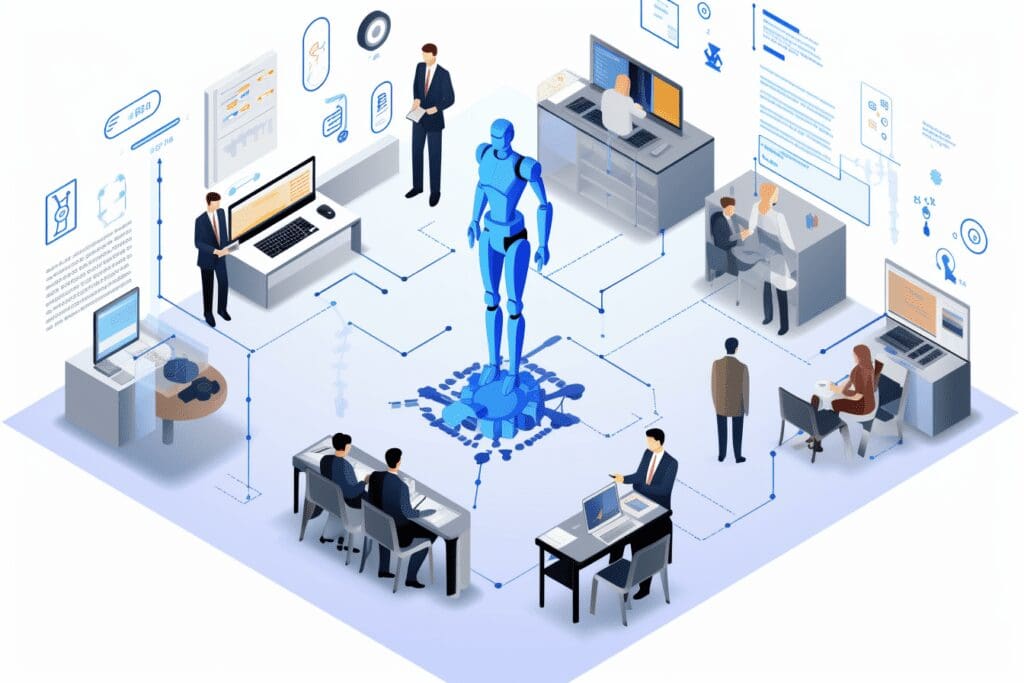
At its core, AI automation combines the capabilities of artificial intelligence, which simulates human intelligence in machines, with automation, which involves technology-driven processes with minimal human intervention.
The result is robust systems that can swiftly learn from data, make informed decisions, and operate without constant human oversight. They process vast volumes of information at lightning speeds, making predictions or decisions based on intricate analyses.
The Tangible Impact of AI Automation
Beyond theoretical concepts, AI automation’s real value lies in its concrete applications that significantly enhance our lives. Consider the healthcare sector, where AI-powered diagnostic tools can accurately pinpoint diseases, potentially saving countless lives.
Visualize a transportation ecosystem where autonomous vehicles reduce accidents caused by human error, simultaneously optimizing traffic for effortless commutes. These real-world applications boost efficiency and safety and offer personalized experiences, revolutionizing industries, and day-to-day experiences.
Diverse Applications of AI Automation
AI automation’s scope is vast, from daily life enhancements to addressing pressing global challenges. For instance, consider the potential of smart homes integrated with the Internet of Things (IoT) to transform our living spaces into responsive environments.
AI-driven budgeting tools and automated investment platforms simplify financial management in personal finance. Meanwhile, in creativity, AI assists in music composition, crafts virtual reality experiences, and even aids writers and filmmakers.
As we address global challenges like environmental sustainability, AI’s contributions, from advanced climate modeling to efficient waste management, underline its indispensable role in crafting a brighter future. Join us as we delve into each segment, unraveling the transformative potential of AI automation.
AI Automation: Reshaping Key Industries
Healthcare: A Balance of Progress and Prudence
While AI-powered diagnostics and treatment methodologies revolutionize healthcare, it’s imperative to understand the associated challenges. Relying solely on AI for life-altering decisions requires careful consideration of ethical implications.
While robotic surgical systems enhance precision, they should augment, not replace, human expertise. It’s also crucial to safeguard patient data, balancing the efficiency of AI-driven administrative tasks with the imperative of privacy.
Transportation: Navigating the Future
Autonomous vehicles promise safer roads, but their integration necessitates addressing safety and regulatory concerns. AI-driven predictive maintenance and route optimization have the potential to redefine logistics, making it more efficient and sustainable. However, implementing these advancements requires thoughtful consideration of their broader impact on society and the environment.
Ethics of AI Automation
In the accelerating world of AI, ethical considerations remain paramount.
Bias and Fairness
AI systems are only as good as the data they’re trained on. Biases in this data can translate into discriminatory outcomes, inadvertently amplifying societal prejudices. It’s crucial to develop AI models that are fair and representative, ensuring that the benefits of AI are equitably distributed.
Transparency and Explainability
Many AI models operate as “black boxes,” making it challenging to decipher their decision-making processes. For trust and accountability, especially in critical sectors like healthcare or finance, transparent and interpretable AI models are indispensable.
Transforming Homes with AI and IoT
Seamless Interactions with Voice Assistants
Voice-controlled virtual assistants, like Amazon’s Alexa or Google Assistant, have redefined our interaction with homes. From adjusting lighting to setting thermostats, voice commands have brought unprecedented convenience.
AI-Driven Energy Efficiency
Intelligent sensors and devices equipped with AI make homes energy-efficient. These devices optimize energy consumption by understanding our habits and merging cost savings with environmental consciousness.
Personalized Entertainment: A New Dawn
No more endless scrolling to find a movie or song. AI’s personalized recommendations, based on user behavior and preferences, ensure there’s always something captivating at your fingertips.
The Evolving Job Market in the Age of AI
AI’s impact on employment is multifaceted and worth exploring in depth.

Job Displacement and Creation
While there’s concern about AI displacing traditional jobs, history has shown that technological advancements often lead to new professions. The key is to anticipate these shifts and prepare the workforce accordingly.
Reskilling and Upskilling
As AI permeates various sectors, continuous learning becomes essential. Programs focusing on reskilling and upskilling can empower individuals to thrive in an AI-driven landscape.
Personal Finance in the Age of AI
Simplifying Finances with Intelligent Budgeting
Forget cumbersome spreadsheets; AI-driven budgeting apps offer insights into spending habits, provide real-time financial overviews, and suggest ways to save.
The AI Investing Revolution
Automated investment platforms powered by AI are democratizing the world of finance. These systems analyze market dynamics, offering diversified portfolios tailored to individual financial goals and risk thresholds. Yet, as we embrace this new era, understanding the ethical implications remains paramount, especially in economic downturns.
Ensuring Transactional Safety
AI’s role in detecting and preventing financial fraud is invaluable in our digital era. By continuously monitoring transaction patterns, these systems provide an additional layer of security, safeguarding our assets.
AI’s Foray into Education
Education, a cornerstone of societal progress, stands to gain immensely from AI.
Personalized Learning
No two learners are identical. AI can tailor educational content to individual learning styles and paces, offering a more personalized and effective learning experience.
Virtual Tutors
Beyond the classroom, AI-driven platforms can provide supplemental learning, ensuring students have round-the-clock access to quality educational resources.
AI in Retail and E-commerce
The retail sector, always quick to adapt, harnesses AI for unprecedented customer experiences.
Customer Insights and Personalization
By analyzing shopping behaviors and preferences, AI systems can offer tailored product recommendations, enhancing the user experience and boosting sales.
Efficient Supply Chains
From inventory predictions to optimal delivery routes, AI ensures the retail supply chain is efficient and responsive to real-time demands.
AI’s Foray into Artistic Domains
AI-Driven Music and Art
AI-generated compositions and artworks might challenge traditional artistic paradigms and open doors to unexplored creative avenues. By analyzing vast data sets, AI can craft pieces that resonate with audiences, expanding the horizons of artistic expression.
Immersive Experiences: VR Meets AI
AI-enhanced virtual reality experiences offer interactive environments that adapt based on user interactions in real-time. These dynamic simulations offer unparalleled immersion, whether exploring a fantastical world or stepping back in time.

Crafting Narratives with AI
Modern storytellers, writers, and filmmakers can harness AI tools to refine their narratives. AI offers novel avenues for creativity, from generating innovative plot twists to optimizing story pacing based on audience feedback.
Designing the Future with AI
Intelligent Design Optimization
AI’s role in product design is pivotal. By analyzing user feedback and market trends, AI offers insights, ensuring designs resonate with end-users and remain relevant in ever-evolving markets.
Rapid Prototyping and AI
Generative AI-powered design algorithms have streamlined the prototyping process, allowing designers to test and refine concepts swiftly, bridging the gap between idea and implementation.
Fashion Forward with AI
AI’s predictive analysis identifies emerging fashion trends, offering designers a competitive edge. AI is the new vogue in fashion design, from predicting popular color schemes to understanding evolving fabric preferences.
The Future of AI Automation
While we’ve seen transformative changes, the journey of AI is just beginning.
Quantum Computing and AI
The potential amalgamation of AI with quantum computing could redefine computational limits, opening doors to solving complex problems currently beyond reach.
Collaborative AI
The future might not be AI versus humans, but AI with humans. Systems where AI complements human intelligence can lead to synergistic outcomes, leveraging both strengths.
AI and Environmental Sustainability
Harnessing AI for climate modeling provides invaluable insights into our planet’s future, helping policymakers draft informed strategies. Intelligent grid management and waste management systems underscore AI’s potential to foster a sustainable future.
Challenges and Roadblocks
While AI’s potential is undeniable, its implementation comes with challenges.
Infrastructure Needs
Robust infrastructure in terms of hardware and software is vital to supporting and scaling AI systems.
Data Privacy and Security
Ensuring data’s ethical and secure use in our data-driven age is paramount. Relying on vast datasets, AI systems must prioritize user privacy and data protection.
Concluding Thoughts
AI automation is undeniably shaping our future. While challenges persist, from job displacement concerns to ethical dilemmas, the transformative potential of AI is undeniable. By melding innovation with ethical considerations and fostering inclusivity, we can envision a future where AI and humanity coalesce, driving collective progress and environmental sustainability.
AI Automation Frequently Asked Questions
What do you mean by automation?
What is automation with an example?
What are the 4 types of automation?
Fixed automation: This type of automation is used for high-volume production of identical products. The machines are designed to perform specific tasks and cannot be easily reprogrammed or adapted.
Programmable automation: In this type of automation, machines or systems can be programmed to perform different tasks or processes. It offers more flexibility compared to fixed automation.
Flexible automation: Flexible automation refers to systems that can be easily adapted or reconfigured to perform different tasks or processes. It combines the benefits of fixed and programmable automation.
Integrated automation: Integrating multiple automation systems or processes to work together seamlessly. It allows for improved coordination and efficiency.
