Master Pillar Page, Topic Cluster & SEO: Elevate Your Web Presence
Having a strong web presence is a valuable asset. However, achieving this requires a robust SEO strategy that focuses on boosting your website’s visibility and ranking. One way to do this is by implementing pillar page and topic cluster strategies, which are essential elements in optimizing your website for search engines.
In this article, you will gain a clear understanding of pillar pages, topic clusters, and the role they play in SEO strategies. We will guide you through the process of creating and optimizing these pages to boost your website’s visibility and ranking.
Key Takeaways
Pillar pages and topic clusters are essential elements in optimizing your website for search engines.
Creating and optimizing pillar pages and topic clusters involves identifying broad topics, conducting keyword research, and auditing your content assets.
There are different types of pillar pages, including resource pillar pages, 10x content pillar pages, and product or service pillar pages.
Optimizing and maintaining your pillar pages requires improving the on-page experience, promoting and building links to the page, and tracking performance over time.
Overview of Topic Clusters and Pillar Pages
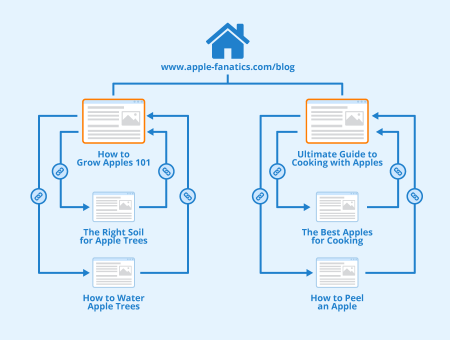
Topic clusters and pillar pages are two critical elements of a content strategy that can help boost website visibility and improve SEO. In the simplest terms, a topic cluster is a group of interlinked articles or blog posts that address a particular subject, while a pillar page is a comprehensive guide that covers the same topic in detail.
Topic clusters and pillar pages work together to create a hierarchical structure that organizes content in a more effective way. The pillar page sits at the top of the hierarchy and provides an overview of a broad topic, while the subtopics are explored in detail in the corresponding cluster pieces. The use of topic clusters and pillar pages helps to create a coherent and user-friendly content strategy that is easy for search engines to index and for readers to navigate.
Developing a content strategy that includes topic clusters and pillar pages will help boost website visibility and improve SEO. By creating comprehensive content that addresses a particular subject, businesses can establish themselves as thought leaders in their industry and improve their online authority. This, in turn, can help improve rankings and drive more traffic to their site.
Why They Are Important for SEO and Content Strategy
Creating topic clusters and pillar pages is not only important for organizing and optimizing content, but it also plays a significant role in boosting visibility and ranking on search engines. By implementing a topic cluster and pillar page strategy, websites can improve their overall SEO game and establish themselves as leaders in their respective industries.
One of the key benefits of pillar pages and topic clusters is that they allow websites to target a broad topic and its related subtopics, ensuring that the content is relevant and comprehensive. This approach not only helps boost visibility and ranking for the target keyword but also drives traffic to the website by providing users with the information they are searching for.
In addition to boosting visibility and traffic, implementing a pillar page and topic cluster strategy also improves overall content organization and the user experience. By providing users with easily navigable content that is comprehensive and relevant, websites can establish themselves as credible sources of information, earning the trust and loyalty of their audiences.
Overall, implementing a topic cluster and pillar page strategy is crucial for any website looking to establish a strong online presence and gain an edge in the competitive landscape. By emphasizing the importance of SEO, content strategy, and boosting visibility and ranking, websites can take their online presence to the next level and achieve long-term success.
Creating Topic Clusters and Pillar Pages
Creating topic clusters and pillar pages is an essential strategy for improving your website’s ranking and visibility in search engines. This approach involves identifying broad topics related to your business or niche and creating a series of subtopics that support those topics. Each subtopic is then developed into its own piece of content, such as a blog post or article. These pieces of content are linked together through the main, or “pillar,” page, creating a cluster of related content that is easily discoverable by search engines.
Here are some steps to follow when creating topic clusters and pillar pages:
Select Broad Topics: Choose broad topics that are related to your business or niche.
Conduct Keyword research: Perform keyword research to identify specific subtopics within the broad topics that you have selected. Your target market should search for these subtopics because they are pertinent to your business.
Create Pillar Pages: Develop a pillar page for each broad topic that you have selected. This page should be in-depth and comprehensive, covering all subtopics related to that topic. The pillar page should also include multimedia elements, such as images and videos, to enhance the user experience.
Create Subtopic Content: Develop content for each subtopic that supports the broad topic. This content can take the form of blog posts, articles, or other types of content.
Link Content Together: Link all subtopic content together through the main pillar page. Use internal linking to connect related subtopics within the content, making it easy for users to navigate and discover relevant content.
By following the steps outlined above, you can create a powerful content strategy that will help you rank higher in search engines and improve your website’s visibility. This approach to content creation also provides a better user experience, as it makes it easier for users to find the content they are looking for.
“Creating topic clusters and pillar pages is an essential strategy for improving your website’s ranking and visibility in search engines.”
Identifying Broad Topics and Specific Subtopics
Effective pillar pages and topic clusters are based on a clear understanding of broad topics and specific subtopics relevant to your business. Selecting the right topics can make all the difference in boosting your website’s SEO and visibility. Here are some tips for identifying broad topics and conducting keyword research to uncover relevant subtopics:
Selecting Broad Topics: Start by considering what your audience is interested in and what topics align with your business goals. Look at industry trends, popular keywords, and your competitors’ content to get an idea of the types of topics that resonate with your audience.
Conducting Keyword Research: Use keyword research tools such as Google Keyword Planner and SEMrush to identify search terms relevant to your broad topic. Focus on long-tail keywords that have lower competition but higher search volume to drive more targeted traffic to your website.
Identifying Specific Subtopics: Once you have identified your broad topic and relevant keywords, brainstorm specific subtopics that will form the basis of your topic cluster. Use keyword research to uncover related phrases and long-tail keywords that you can use as subtopics. These subtopics should provide valuable information on the topic and support the main pillar page content.
Remember to keep your audience’s interests and intent in mind when selecting broad topics and specific subtopics. Focus on providing valuable information and answering their questions to establish your business as an authoritative source in your industry.
Auditing Existing Content Assets
Conducting a content audit is an essential step in creating effective pillar pages and topic clusters. You need to take inventory of your current content assets to identify gaps and opportunities for creating new content.
Start with a content inventory to list all your web pages, blog posts, and other types of content. You can create a spreadsheet or use a tool like Screaming Frog to crawl your site and generate a list of URLs. Once you have a comprehensive list, you can move on to the next step.
The next step is to perform a gap analysis to identify content that you don’t have but need. For example, if you have a product page for a specific product, but no blog post discussing the benefits of that product, that’s a gap you need to fill.
Finally, create a content audit report to summarize your findings and guide your content creation efforts. Use this report to identify which pages or posts you can turn into pillar pages or subtopics, which ones need updating, and which ones can be deleted or redirected.
By conducting a thorough content audit, you’ll be able to identify gaps and opportunities for creating pillar pages and topic clusters that will boost your website’s visibility and ranking.
Developing the Pillar Page
Once the topic cluster has been identified, it’s time to develop the pillar page. An optimized pillar page is the foundation of any effective content strategy that aims to rank for a target keyword. It should be comprehensive, engaging, and visually appealing, with multimedia elements such as videos, images, and infographics to enhance the user experience.
Meta titles and descriptions should be optimized to ensure that the pillar page stands out in search engine results pages. The target keyword should be prominently included in the H1 tag, along with other relevant header tags (H2, H3, etc.), to make the page easy to skim and read.
The pillar page should provide a comprehensive overview of the broad topic, covering all subtopics in detail. It should answer common questions and provide insights and examples that illustrate the topic in depth.
Key takeaways:
Develop a comprehensive pillar page to provide a solid foundation for the topic cluster
Include multimedia elements to enhance engagement and user experience
Optimize meta titles and descriptions for better search engine visibility
Include the target keyword in the H1 tag and other header tags for easy skimming and reading
Connecting Related Subtopic Content
Effective content strategy involves not only creating pillar pages but also connecting them to relevant subtopics. By linking out to related blog posts, interlinking other pillar pages, and briefly discussing subtopics within the pillar page itself, you can provide readers with a more comprehensive understanding of the topic and improve their overall user experience.
When linking out to related subtopics, it is essential to ensure that the content is high-quality and relevant to the topic of the pillar page. Avoid linking to irrelevant content or low-quality sources, as this can hurt your website’s credibility and ranking. Instead, prioritize linking out to authoritative sources and high-quality content that complements the main pillar page.
In addition to linking out to related subtopics, interlinking other pillar pages can also help improve the overall organization and user experience of the website. By interlinking other pillar pages, you can demonstrate your website’s expertise on a broad topic and build a strong internal linking structure that helps search engines understand the relationships between pages on your website.
Lastly, briefly discussing subtopics within the pillar page itself helps provide readers with additional information on related subjects while still keeping the focus on the main topic. You can accomplish this by including internal links to subtopic pages within the main pillar page or by adding a brief section about subtopics.
Promoting and Accessing Pillar Pages
Creating a pillar page is just the beginning. To maximize its impact, it’s crucial to promote it and make it easily accessible to users. Here are some recommended strategies:
Site Navigation
Include the pillar page in the site navigation menu, preferably in the main menu, to make it easily accessible for users. This will also help search engines crawl and index the page.
Internal Linking
Interlinking with other pillar pages and blog posts helps to boost visibility and SEO value. Use anchor text that includes the target keyword, making it clear to the reader what the link is about.
Email and Social Promotion
Utilize email marketing campaigns and social media platforms to promote the pillar page. Create compelling messaging that encourages readers to visit the page and share it with their networks.
Measure Performance
Track the performance of the pillar page regularly to determine its effectiveness. Use analytics tools to measure factors such as page views, time on page, bounce rate, and conversion rate. Based on the results, make improvements and adjust the promotion strategy accordingly.
Types of Pillar Pages
There are different types of pillar pages that businesses can create to achieve their SEO and content strategy goals. Each type of pillar page has its own characteristics and benefits, and choosing the right type requires understanding the audience and the goals of the business. Here are the three main types of pillar pages:
Resource Pillar Pages
Resource pillar pages are comprehensive guides that provide in-depth information on a particular topic. They often cover a broad topic and break it down into subtopics, providing a valuable resource for readers. Resource pillar pages are ideal for businesses that want to establish their authority in a particular industry or niche. They can be used as a cornerstone piece of content to build an entire content strategy around.
Resource pillar pages should be comprehensive and well-researched, incorporating multimedia elements such as images and videos to enhance the reading experience. They should also include links to related content and internal links to other pages on the website. Overall, resource pillar pages should be designed to provide value to readers and establish the business as an expert in their field.
10x Content Pillar Pages
10x content pillar pages go above and beyond typical content by providing exceptional value to the reader. These pages are designed to be ten times better than anything else available on the internet for a given topic. They often feature original research, exclusive interviews, or interactive elements that make them stand out.
10x content pillar pages are ideal for businesses that want to attract high-quality backlinks and establish their website as an authority in their industry. They require a significant investment of time and resources but can pay off in increased website traffic and improved search engine rankings.
Product or Service Pillar Pages
Product or service pillar pages aim to advertise a particular good or service that a company provides. These pages provide detailed information on the product or service, including features, benefits, and pricing. They often include customer testimonials or case studies to provide social proof and demonstrate the value of the product or service.
Product or service Pillar pages are ideal for businesses that want to drive conversions and increase sales of a particular product or service. They should be optimized for relevant keywords and incorporate persuasive copywriting techniques to encourage visitors to take action.
Optimizing and Maintaining Pillar Pages
Creating an optimized and informative pillar page is just the first step in your SEO journey. Keeping your page up-to-date and maintaining its performance is essential to ensuring it continues to drive traffic to your website. Here are some tips for optimizing and maintaining your pillar pages:
On-page Experience
On-page experience is crucial to keeping your visitors engaged and on your site. You must ensure that your pillar page’s layout, formatting, and content are visually appealing and user-friendly. Divide the content into smaller sections, use bullet points, and emphasize keywords to make it easier for your visitors to digest the information. Use multimedia elements such as images, videos, and infographics to make the page more interesting and informative.
Promoting and Building Links
Promoting your pillar pages via various channels is essential to increasing visibility and attracting more traffic. Use email, social media, and paid advertising to promote your page to relevant audiences. You can also build internal links to the pillar page from your other website pages or blog posts. This helps to establish the page’s authority and relevance on your website, which can have a significant impact on search rankings.
Tracking Performance
Measuring the performance of your pillar pages is critical to maintaining their effectiveness and identifying opportunities for improvement. Use tools like Google Analytics to track page views, bounce rates, time-on-page, and other metrics. This will help you understand how visitors interact with your pillar page and whether it’s meeting your business goals. Use this information to make data-driven decisions about content updates or promotional strategies.
By following these tips, you can ensure your pillar pages remain optimized and effective, driving traffic to your website and improving your SEO rankings over time.
Conclusion
In conclusion, implementing pillar page and topic cluster strategies is crucial for boosting website visibility and ranking. By creating high-quality content that is organized around broad topics and relevant subtopics, businesses can improve the user experience and attract more traffic to their site.
It’s important to remember that creating pillar pages and topic clusters is not a one-time task, but an ongoing process. Optimizing and maintaining these pages is essential for long-term success, and businesses should regularly track their performance and make improvements as needed.
Overall, by following the steps outlined in this article, businesses can elevate their web presence and improve their SEO game. So, what are you waiting for? Start creating your pillar pages and topic clusters today!
FAQ
Q: What are topic clusters and pillar pages?
A: Topic clusters and pillar pages are content organization strategies used in SEO and content strategy. Topic clusters are groups of interlinked content pieces centered around a broad topic, while pillar pages are comprehensive, authoritative pieces of content that serve as the main hub for a topic cluster.
Q: Why are topic clusters and pillar pages important for SEO and content strategy?
A: Topic clusters and pillar pages are important because they help boost website visibility and ranking. They improve content organization and the user experience, making it easier for search engines to understand the context and relevance of the content.
Q: How do I create topic clusters and pillar pages?
A: Creating topic clusters and pillar pages involves selecting broad topics, conducting keyword research to identify relevant subtopics, and interlinking the content pieces to form a cohesive cluster. The pillar page should be a comprehensive guide to the main topic, while the subtopics explore specific aspects in more detail.
Q: How do I identify broad topics and specific subtopics?
A: To identify broad topics and specific subtopics, you can start by brainstorming ideas related to your industry’s or target audience’s interests. Conduct keyword research to see what topics people are searching for, and analyze competitors’ content to identify gaps and opportunities for your own topic clusters.
Q: How do I audit my existing content assets for topic clusters and pillar pages?
A: Auditing existing content assets involves taking inventory of your current content, performing gap analysis to identify missing pieces, and creating content audit reports. This helps you understand what content you already have and what needs to be created or optimized to form topic clusters and pillar pages.
Q: How do I develop a pillar page?
A: Developing a pillar page involves publishing an in-depth piece of content optimized for the target keyword. It should include multimedia elements to enhance engagement, and the meta titles, descriptions, and H1 tags should be optimized for better search engine visibility.
Q: How do I connect related subtopic content to the pillar page?
A: Connecting related subtopic content to the pillar page can be done by linking out to relevant blog posts, interlinking other pillar pages within the cluster, and briefly discussing subtopics within the pillar page itself. This helps create a cohesive content structure and provides a smooth user experience.
Q: How do I promote and access pillar pages?
A: Promoting and accessing pillar pages can be done by including links in site navigation and internal linking, using CTAs to call out pillar pages on the homepage, and leveraging email and social promotion strategies. Making the pillar page easily accessible helps drive traffic and engagement.
Q: What are the different types of pillar pages?
A: There are different types of pillar pages, including resource pillar pages that provide valuable information, 10x content pillar pages that aim to be the best resource on a particular topic, and product or service pillar pages that highlight specific offerings. The type of pillar page to use depends on your goals and content strategy.
Q: How do I optimize and maintain pillar pages?
A: Optimizing and maintaining pillar pages involves improving the on-page experience, promoting and building links to the pillar page, and tracking performance to make continuous improvements. Regularly updating and optimizing the pillar page ensures its relevance and effectiveness over time.
Q: What is the importance of implementing topic clusters and pillar pages for SEO?
A: Implementing topic clusters and pillar pages is important for SEO because it helps improve website visibility and ranking. It allows search engines to understand the context and relevance of the content, leading to better search engine rankings and more organic traffic.
Ryan Hidden is the visionary founder of Hidden Digital AI-X, an agency at the forefront of AI and automation dedicated to revolutionizing digital marketing strategies.
With an impressive educational background in Political Science, Economics, and Law, Ryan has honed his productivity, knowledge management, and note-taking skills, which he now leverages to offer innovative AI automation solutions.
A multipotentialite at heart, Ryan’s passion for storytelling, education, and technology drives him to share his expertise on AI, automation, and more through engaging content.
Leading with wit and a commitment to personalized service, Ryan and his team at Hidden Digital AI-X are your go-to experts for transforming your digital presence and staying ahead in the ever-evolving digital landscape.