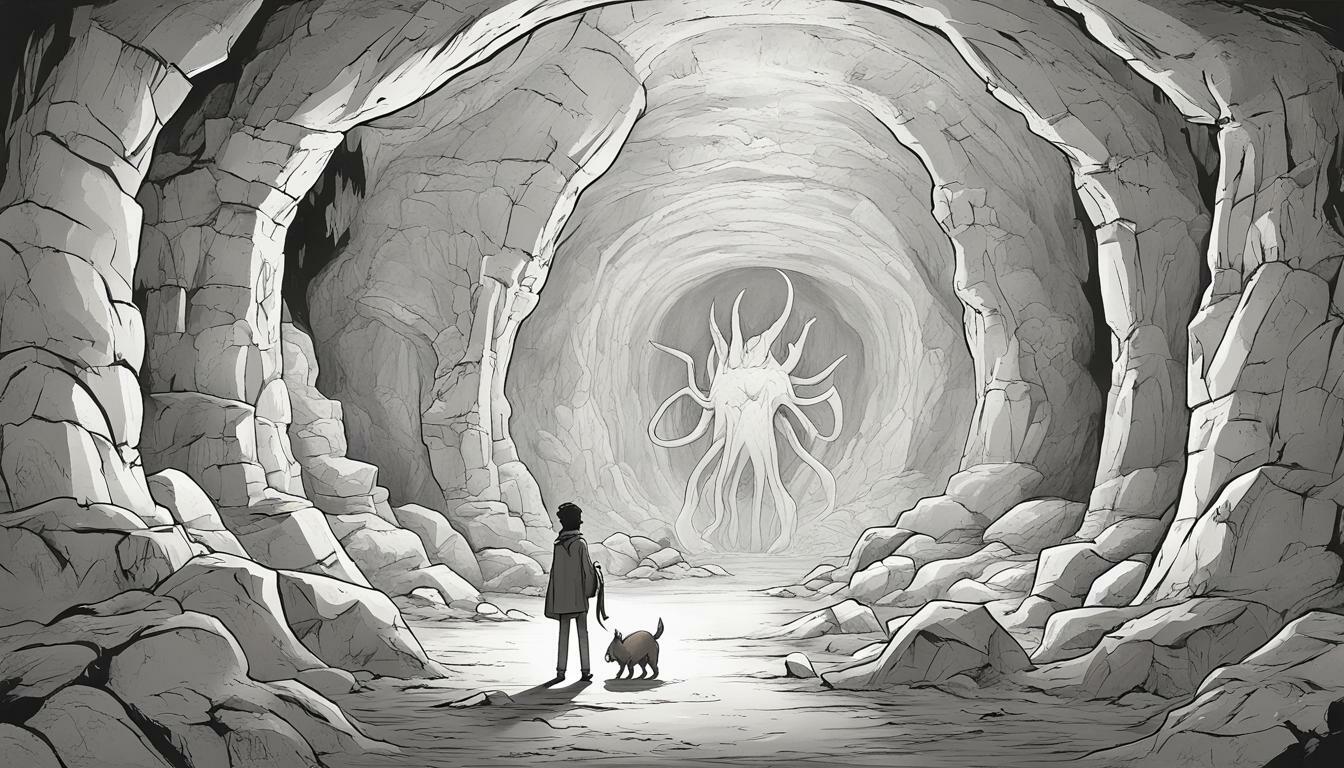
As artificial intelligence (AI) continues to drive technological advancements, it has significantly impacted the gaming industry. One such application is the Wumpus World game, which is widely used to develop and test various AI algorithms. The game provides a dynamic environment with complex challenges that AI agents must navigate to achieve success. In this comprehensive guide, we will delve into the intricacies of the Wumpus World in AI and explore its significance in gaming and artificial intelligence.
Key Takeaways:
- The Wumpus World game provides a dynamic environment with complex challenges that AI agents must navigate to succeed.
- The Wumpus World has significant gaming and artificial intelligence applications, making it an active research and development area.
- AI algorithms are used to solve the challenges presented in the Wumpus World game, including popular algorithms such as depth-first search, breadth-first search, and A* search.
Understanding the Wumpus World Environment
Before delving into the complexities of AI in the Wumpus World, it is essential to understand the environment in which the game takes place. The Wumpus World is a two-dimensional grid with pits, walls, and a Wumpus creature that the player’s agent must avoid.
The player’s goal is to move the agent through the environment to reach the treasure while avoiding hazards such as falling into a pit or encountering the Wumpus. The environment is dynamic, with the player’s actions causing changes, such as the breeze from nearby pits or the stench of the Wumpus.
Furthermore, the agent has incomplete knowledge of the environment, meaning it cannot see beyond its immediate vicinity and must use its sensors to infer what is happening elsewhere. This complexity adds to the challenge of designing AI algorithms that can effectively navigate the Wumpus World and make informed decisions to achieve the objective.

The Layout of the Wumpus World
The Wumpus World is a square grid of cells, with each cell containing either a wall, a pit, the Wumpus, the treasure, or an open space. The player’s agent can move through open spaces and turn right or left but cannot move diagonally. The grid’s size, number of pits, and location of the Wumpus and treasure can vary between games, creating unique challenges each time.
The Rules and Constraints of the Wumpus World
The Wumpus World has rules and constraints that players and AI agents must follow. The agent has a limited supply of arrows that it can use to kill the Wumpus from a distance. If the agent runs out of arrows or encounters the Wumpus at close range, the Wumpus will kill the agent. Falling into a pit also results in instant death, and reaching the treasure without collecting it will fail.
Another constraint is the agent’s health, which decreases each time it enters a cell with the Wumpus’s stench or a pit’s breeze. Once the agent’s health reaches zero, the game fails.
The Wumpus World’s rules and constraints make it a challenging environment for AI agents to navigate and solve. AI algorithms must account for the agent’s limited resources, incomplete information, and dynamic environment to achieve success.
Intelligent Agents in the Wumpus World
The Wumpus World presents a complex and dynamic environment where AI agents must navigate and make decisions. Agents are autonomous entities that perceive their surroundings and act upon them to achieve particular goals. In the Wumpus World, agents are AI-based and use sensory inputs to determine their position, detect obstacles and hazards, and decide on the best course of action toward the objective.
Intelligent agents in the Wumpus World can be classified into different types based on their capabilities and behavior. Simple reflex agents act based on the current percept without maintaining an internal state or memory. On the other hand, model-based reflex agents maintain an internal state to keep track of the world and update their actions based on the history of observations. Goal-based agents have predefined objectives and create plans to achieve them. Lastly, utility-based agents consider the cost and benefit of their actions and choose the most optimal path towards the goal.
The choice of agent type depends on the nature of the Wumpus World problem and the available resources. As the complexity of the game increases, the need for more sophisticated agents becomes apparent. Designing an efficient and effective agent is essential for optimal performance.

An example of an AI-based Wumpus World agent is depicted in the figure above. The agent is equipped with sensors that provide information about the surrounding environment. Based on the percept, the agent decides to move in a particular direction, shoot an arrow, or grab the gold. The agent’s behavior is determined by rules and logical inferences that determine the best action given the available information.
Creating a successful AI-based agent in the Wumpus World requires a deep understanding of the game environment and the available AI techniques. It is essential to weigh the trade-offs between different agent types and choose the one that best suits the problem. Developing an effective learning mechanism that allows the agent to adapt and improve its performance over time is critical for long-term success.
AI Algorithms in the Wumpus World
Various AI algorithms are utilized to solve the Wumpus World’s complex challenges. These algorithms are designed to efficiently navigate the dynamic and unpredictable environment of the game while also making optimal decisions to achieve success.
One popular algorithm used in the Wumpus World is depth-first search. This algorithm explores a path to its maximum depth before backtracking to explore another path. While this algorithm can be effective in simple environments, it can become inefficient in more complex environments.
Breadth-first search is another algorithm used in the game, which explores all possible paths at each level before moving to the next level. This algorithm is more effective in complex environments but can require significant computational resources.
A* search is a more sophisticated algorithm combining the benefits of depth-first and breadth-first search. This algorithm employs heuristics to guide the search towards the optimal path, resulting in a more efficient and effective solution.

These algorithms can also be enhanced with heuristics and problem-specific techniques that help improve the algorithm’s performance. For example, in the Wumpus World, heuristics can be used to identify safe and dangerous areas of the environment, allowing the algorithm to make more informed decisions.
However, despite the effectiveness of these algorithms, there are still limitations to their use in the Wumpus World. Computational complexity can become an issue, especially in larger environments. Additionally, knowledge representation limitations and the need for effective learning mechanisms can pose challenges for AI solutions in the game.
Despite these challenges, AI algorithms remain essential to successfully navigating and solving the Wumpus World. As advancements in AI technologies continue to emerge, we can expect to see even more sophisticated algorithms and solutions for this game and beyond.
Solving the Wumpus World Using AI
One of the primary goals of using AI in the Wumpus World is to develop an agent that can successfully navigate and collect all the gold while avoiding the game’s hazards. Creating an AI solution for the Wumpus World involves several steps, including knowledge representation, logical inference, and decision-making.
When representing the knowledge of the game world, the agent must model the state of the environment and update its knowledge as it explores and gains new information. The agent must also represent its state, such as its current location and the remaining actions it can take.
Logical inference is crucial for determining the best action for the agent to take in a given state. The agent must use its knowledge representation to reason about the environment and make inferences about the location of hazards and gold.
Decision-making involves selecting the action that maximizes the agent’s chances of success. This requires the agent to perform a cost-benefit analysis of available actions and choose the most expected utility.
Solving the Wumpus World can be challenging due to the complexity and uncertainty of the game environment. However, AI algorithms such as depth-first search, breadth-first search, and A* search can be used to explore the environment and find optimal solutions efficiently.
One common challenge in the Wumpus World is balancing exploration and exploitation. The agent must explore the environment to gain new information while exploiting its current knowledge to progress toward its goals. Additionally, resource management is important in ensuring the agent has adequate resources, such as arrows, to succeed in the game.
Solving the Wumpus World using AI requires a combination of knowledge representation, logical inference, decision-making, and algorithmic efficiency. While challenges and limitations exist, advancements in AI technologies hold promise for further enhancing the game and its applications beyond gaming.

AI Strategies for Success in the Wumpus World
One of the critical aspects of achieving success in the Wumpus World is employing effective AI strategies. Wumpus World agents need to make decisions based on the current state of the environment and available information. Here are some of the popular strategies used:
- Risk Assessment: The agent evaluates the risks associated with each possible action and chooses the action with the least risk. This strategy is useful when there is uncertainty in the environment.
- Exploration vs. Exploitation: The agent decides whether to explore the unvisited areas of the environment or exploit the knowledge already acquired. This strategy is beneficial when the environment is significant, and there is a trade-off between developing new knowledge and exploiting known information.
- Resource Management: The agent manages its resources, such as arrows and actions, to achieve its goals efficiently. This strategy is useful when the agent has limited resources to complete the task.
Moreover, adaptive strategies that learn and improve over time are also important for success in the Wumpus World. These strategies can be implemented by training the agent using reinforcement learning or other machine learning techniques. Adaptive strategies allow the agent to adapt to environmental changes and improve performance.
Implementing these strategies will improve the agent’s ability to navigate the Wumpus World and make optimal decisions. These strategies are crucial for an AI agent to succeed in the Wumpus World.

“Adaptive strategies allow the agent to adapt to changes in the environment and improve its performance over time.”
AI in Gaming: Impact and Applications
Artificial intelligence transforms the gaming industry, enabling realistic virtual environments, intelligent NPCs (non-playable characters), and adaptive gameplay. With the increasing complexity of modern games, AI is essential for delivering engaging and challenging gaming experiences.
Intelligent algorithms are used to create realistic physics engines, generate dynamic environments, and develop advanced AI opponents. This allows players to experience increasingly complex and challenging games that adapt to their gameplay style and abilities. For example, AI algorithms can create intelligent opponents that learn from the player’s behavior, making the game more challenging and rewarding as the player progresses.
AI is also being utilized to enhance the social aspects of gaming, such as developing chatbots that can interact with players in natural language, creating personalized recommendations, and even providing emotional support. AI-based gaming assistants are being developed to help players with quest tracking, item management, and character customization tasks.

With the proliferation of AI in gaming, concerns regarding the potential impact on players exist. One concern is the potential for AI to manipulate players, gathering and analyzing data to personalize the gaming experience and incentivize players to spend more money. Additionally, there are concerns regarding the ethics of AI-based gaming assistants, such as the potential for them to encourage unhealthy gaming habits or provide biased recommendations.
Despite these concerns, the applications of AI in gaming are limitless. AI is transforming the gaming industry, providing players engaging, challenging, and personalized experiences. With advancements in AI technology, we can expect to see even more innovative applications of AI in gaming.
Challenges and Limitations of AI in the Wumpus World
The Wumpus World is a complex and challenging environment for AI agents to navigate and solve. While various AI algorithms can be employed to tackle the game, several challenges and limitations must be addressed.
One major challenge is computational complexity. The Wumpus World is a dynamic environment where the AI agent must make decisions based on incomplete information, which can result in exponentially large search spaces. This can lead to increased processing time and decreased performance.
Another challenge is the limitations of knowledge representation. The Wumpus World environment is complex and multifaceted, requiring the AI agent to represent and reason about various types of knowledge, such as spatial relationships, sensory data, and game rules. However, traditional knowledge representation techniques may not be sufficient to capture all the game’s nuances.
Furthermore, effective learning mechanisms are essential for optimal performance in the Wumpus World. The AI agent must be able to adapt and learn from its experiences in the game to improve its decision-making abilities. However, designing effective learning mechanisms can be a challenging task.
Despite these challenges, there have been significant advancements in AI technologies that can help overcome these limitations. For example, deep learning and neural networks can be used to learn and reason about complex data. In contrast, reinforcement learning can be used to improve the adaptive capabilities of the AI agent.
Overall, the Wumpus World presents a rich and dynamic AI research and development environment. While there are challenges and limitations to using AI in the game, there is also great potential for innovation and progress.

The Future of the Wumpus World and AI
The Wumpus World game has been widely used as a benchmark for evaluating the performance of AI algorithms. As AI technologies continue to advance, the potential applications of the Wumpus World concept are becoming increasingly promising.
One potential area for future development is using the Wumpus World in robotics. The game’s dynamic environment and complex decision-making processes are similar to those encountered by robots in real-world scenarios. Using the Wumpus World as a simulation tool, researchers can develop and test intelligent robots that can navigate and make decisions in complex and unpredictable environments.
Another potential application is the use of the Wumpus World in decision-making systems. The game’s logic-based approach to problem-solving can be applied to real-world decision-making scenarios, such as financial planning or risk assessment. Using the Wumpus World model, decision-making systems can be designed to make informed choices based on the available information and prior knowledge.
As AI technologies evolve, the Wumpus World game will likely become even more relevant in artificial intelligence. By using the game as a benchmark and a testing ground for new AI algorithms, researchers can continue to push the boundaries of what is possible in AI.
In conclusion, the future of the Wumpus World in AI is bright. As new AI technologies are developed and refined, the game will continue to play a vital role in advancing the field of artificial intelligence.

Conclusion
In conclusion, the Wumpus World is a fascinating artificial intelligence and gaming concept. It offers a unique challenge for AI agents, requiring them to navigate a complex and dynamic environment, make decisions based on uncertain knowledge, and efficiently utilize available resources.
Through exploring the Wumpus World, we have gained insights into the different types of AI-based agents that can be used to tackle the game’s challenges and the AI algorithms that can be employed to solve them. We have also learned about the effective strategies that can be deployed to achieve success in the game and beyond.
As demonstrated by the Wumpus World, AI in gaming has significant implications beyond just entertainment. It can potentially revolutionize decision-making, especially in robotics and automation.
However, using AI in the Wumpus World also comes with challenges and limitations, such as computational complexity and the need for effective learning mechanisms. Nonetheless, the future of the Wumpus World in AI is promising, and advancements in AI technology can further enhance gaming and decision-making.
Thus, it is essential to continue exploring and experimenting with the Wumpus World and its applications to further the field of artificial intelligence. As we continue developing and designing AI-powered systems, the Wumpus World will undoubtedly remain a valuable and exciting study area.
FAQ
Q: What is the Wumpus World in AI?
A: The Wumpus World is a simulated environment commonly used in artificial intelligence to test and develop AI algorithms. It is a grid-based game where an AI agent must navigate and make decisions to find a goal while avoiding obstacles and hazards.
Q: How are AI algorithms utilized in the Wumpus World?
A: AI algorithms are utilized in the Wumpus World to solve the challenges presented by the game. These algorithms allow AI agents to make intelligent decisions based on their environment, goals, and available information. They can be used to create efficient and effective strategies for successful navigation and goal achievement.
Q: What are intelligent agents in the Wumpus World?
A: Intelligent agents in the Wumpus World are AI-based entities interacting with the game environment and making decisions to achieve their goals. These agents can use various AI techniques and algorithms to analyze the environment, infer information, and plan actions. They can adapt and learn from their experiences to improve their performance.
Q: Which AI algorithms are commonly used in the Wumpus World?
A: Some commonly used AI algorithms in the Wumpus World include depth-first search, breadth-first search, and A* search. These algorithms help AI agents explore the game environment, find optimal paths, and avoid hazards. They can be enhanced with heuristics to improve their efficiency and effectiveness.
Q: How is the Wumpus World solved using AI?
A: The Wumpus World can be solved using AI by creating an AI solution incorporating knowledge representation, logical inference, and decision-making techniques. AI agents can use these methodologies to gather information about the game environment, reason about the possible consequences of their actions, and make informed decisions to achieve their goals.
Q: What strategies can be employed for success in the Wumpus World?
A: Strategies for success in the Wumpus World include risk assessment, exploration vs. exploitation, and resource management. AI agents can assess the risks associated with different actions, balance exploration to gather more information and manage their resources effectively to maximize their chances of achieving their goals.
Q: How does AI impact gaming beyond the Wumpus World?
A: AI has a broad impact on gaming beyond the Wumpus World. It enables the creation of realistic virtual environments, intelligent non-playable characters (NPCs), and adaptive gameplay. AI technologies in gaming continue to evolve, leading to more immersive and engaging gaming experiences.
Q: What are the challenges and limitations of AI in the Wumpus World?
A: The challenges and limitations of AI in the Wumpus World include computational complexity, limitations of knowledge representation, and the need for effective learning mechanisms. Overcoming these challenges requires innovative approaches and ongoing research to improve AI performance in the game.
Q: What is the future of the Wumpus World and AI?
A: The future of the Wumpus World and AI looks promising. Advancements in AI technologies will further enhance the Wumpus World game and its applications. The concept of the Wumpus World may also find applications in other domains, such as robotics and decision-making systems.
