
Promotion and distribution serve distinct yet complementary roles within an integrated digital marketing strategy. This article explains the key differences between promotion and distribution, providing clarity so marketers can optimize and align both areas for effectiveness.
Promotions vs. Distribution Strategies in Digital Marketing
What is Promotion?
Promotion refers to activities that communicate the merits of a product and persuade target audiences to buy it. Promotions aim to build awareness (67% higher awareness for brands that blog frequently), increase sales (content marketing has an ROI of $3.11 for every $1 spent), and influence consumer behavior and attitudes by fostering engagement and connection. Promotions include advertising, sales promotions, direct marketing, personal selling, public relations, social media, and influencer marketing. Promotions require creativity, persuasive messaging, and an understanding of customer motivations to drive demand directly.
What is Distribution?
In contrast, distribution refers to how goods and services are delivered to the end consumer. It focuses on operational efficiency getting products to the right place at the right time to maximize availability, accessibility, and convenience. Distribution involves managing inventory, order fulfillment, and coordinating a network of distribution channels such as brick-and-mortar retailers, e-commerce sites, and direct-to-consumer options. Distribution strategies rely heavily on data-driven analysis and process optimization rather than persuasion.
Promotions Create Demand, Distribution Fulfills It
While promotions create demand by building brand relationships and engaging customers, distributions fulfill that demand through efficient supply chain logistics. Promotions cultivate the interest and desire for a product, while distribution ensures seamless accessibility and a smooth purchasing process.
Aligning Promotions and Distribution for Effectiveness
Though distinct, promotion and distribution work hand in hand as complementary components of an integrated digital marketing strategy. Aligning promotional strategies that spark consumer interest with distribution strategies that optimize convenience and accessibility leads to more significant customer acquisition, retention, and overall effectiveness.
Coordinating Roles of Promotion and Distribution
Understanding the unique purposes of promotion and distribution allows marketers to coordinate their roles strategically. Promotions attract and engage, and distribution delivers and converts. This omnichannel coordination is critical to digital marketing success in an age of emerging social media and transforming digital channels. Maintaining clarity on the difference between promotions and distribution will prevent frustration and lead to optimal results.
Promotion Strategies in Digital Marketing
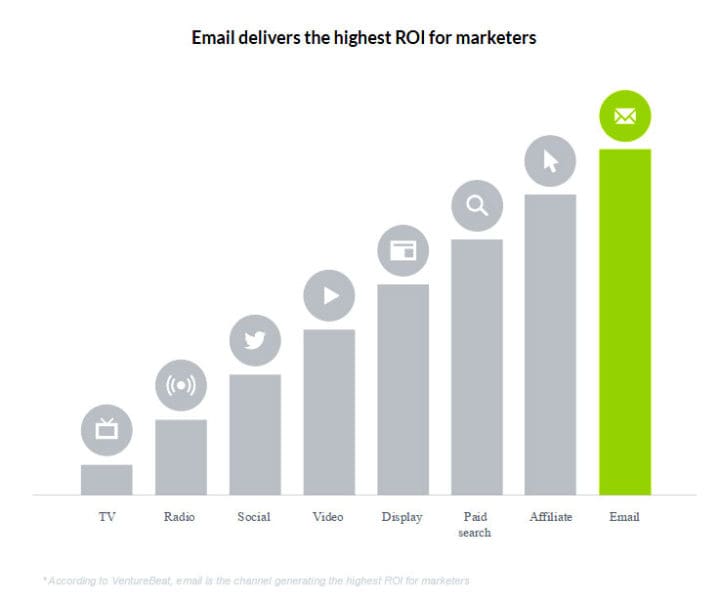
Promotion refers to the range of activities that communicate the merits of a product and persuade target customers to buy it. Promotions in digital marketing aim to build awareness (67% higher for blogging brands), increase sales (email marketing ROI of 3800%), and positively influence consumer behavior and attitudes by fostering engagement and connection with the brand.
Some key promotion strategies used in digital marketing include:
Advertising – Paid ads across channels like search, social media, display banners, TV, radio, etc. Digital advertising allows for highly targeted, optimized, and measurable campaigns.
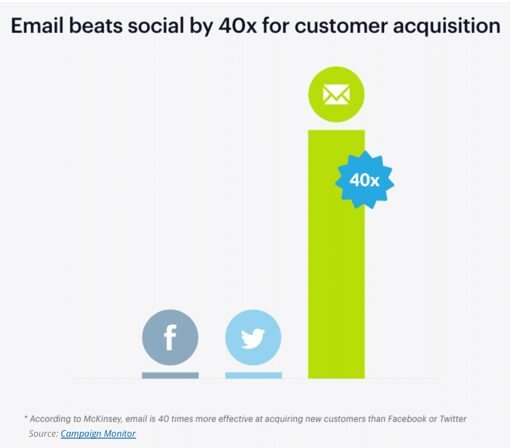
Sales Promotions – Short-term incentives like discounts, coupons, contests, and free trials that encourage purchases or sales. E-commerce platforms provide easy sales promotion tools.
Direct Marketing – Email, text/SMS marketing, and messaging apps provide direct channels to reach and nurture leads. Segmentation and personalization help target promotions.
Public Relations – PR activities like press releases, events, sponsorships, and partnerships help garner earned media and word-of-mouth buzz.
Social Media – Organic and paid social promotion through content, conversations, and communities on networks like Facebook, Instagram, YouTube, Twitter, and LinkedIn.
Influencer Marketing – Engaging influencers with target audience reach to promote products on social media and content. Micro and nano-influencers provide authenticity.
Content Marketing – Blogs, videos, webinars, whitepapers, guides, FAQs, infographics, and other formats allow informative and engaging brand storytelling.
Search Engine Optimization – Optimizing website content for search engines increases visibility for relevant organic searches related to products or brands.
The emphasis of promotions is to attract the right audience, deliver persuasive and appealing messaging, build mindshare and brand affinity, and ultimately motivate consumer action and purchases. Peter Drucker noted that the aim is to “know and understand the customer so well the product or service fits him and sells itself.”
A strategic mix of digital promotion strategies aligned with the brand and audience allows businesses to break through the noise and effectively communicate their value. Monitoring performance through critical metrics helps refine campaigns and derive optimal investment returns.
Distribution Strategies in Digital Marketing
While promotions focus on driving demand and engaging customers, distribution refers to how products and services are delivered to the end consumer. Distribution gets goods to the right place at the right time through coordinated channel management and optimized supply chain processes.
Some key distribution strategies and components in digital marketing include:
Inventory Management – Tracking and controlling stock levels across warehouses, stores, and in transit. Inventory optimization balances availability and costs.
Order Fulfillment – Receiving and processing orders, picking, packing, shipping, and returns. Automation improves speed and accuracy.
Distribution Channels – The routes to market used to reach customers:
- Brick-and-Mortar – Physical store retailers. Omnichannel initiatives bridge to online.
- E-Commerce – Online retailers, distributors like Amazon, and company-owned sites.
- Direct-to-consumer – Selling directly to customers, bypassing intermediaries.
Last Mile Delivery – Final leg of the journey to the customer’s doorstep. Options like buy-online-pickup-in-store and curbside pickup.
Supply Chain Visibility – Real-time tracking of inventory and orders across the distribution network. Provides agility.
Transportation Management – Coordinating parcel, LTL, FTL, intermodal, and other freight transport efficiently and cost-effectively.
The goal of distribution is operational efficiency – optimizing the logistics processes to maximize product availability, accessibility, and convenience for the customer. Distribution relies on data-driven analysis to continually improve.
Omnichannel distribution integrates channels so customers can shop whenever and wherever they want. A hybrid distribution strategy combining physical and digital routes provides flexibility. Modern consumers expect seamless, smooth, and swift deliveries. Distribution makes it happen.
As E. Jerome McCarthy noted, “Distribution is king.” Aligning distribution strategies with emerging digital channels and promotion efforts is imperative for customer satisfaction, retention, and acquisition in today’s marketplace.
73% of customers prefer buying from brands that customize communications to their preferences – which shows the importance of targeted, personalized distribution
(Salesforce)
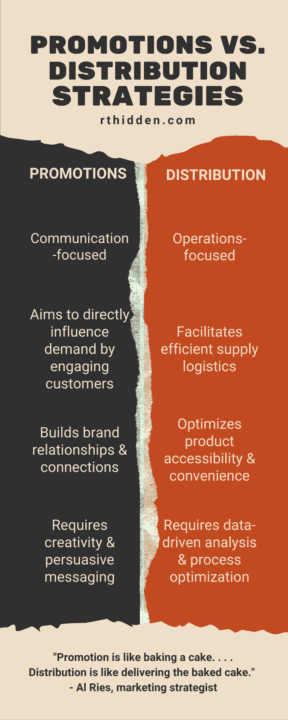
Critical Differences Between Promotions and Distribution in Digital Marketing
Though promotion and distribution are complementary components of an integrated digital marketing strategy, there are several important distinctions between these two areas:
Focus
- Promotion is communication-focused, building brand relationships and sparking demand.
- Distribution is operations-focused on optimizing logistics and supply chain processes.
Purpose
- The promotion aims to influence demand by engaging and persuading customers directly.
- Distribution seeks to facilitate supply and fulfill demand through convenient delivery efficiently.
Strategy
- Promotions require creativity, storytelling, and persuasive messaging to connect emotionally.
- Distributions rely heavily on data-driven analysis and process optimization for efficiency.
Execution
- Promotions utilize diverse channels, from advertising to influencers, for maximum reach and impact.
- Distribution coordinates inventory, warehouses, transport, and final mile delivery for a seamless customer experience.
As Al Ries explains, “Promotion is like baking a cake – you carefully prepare the batter, set the oven temperature, and bake it perfectly. Distribution is like delivering the baked cake – you want it to arrive looking as fresh and delicious as it did coming out of the oven.”
While promotions focus on customer engagement, distribution enables customer satisfaction through convenience and accessibility. Aligning these outward and inward-facing strategies allows brands to attract, convert, and retain customers in a coordinated omnichannel approach.
Understanding the unique differences between promotion and distribution strategies allows businesses to optimize both areas and coordinate them strategically to deliver the best possible customer experience.
Conclusion
In summary, promotion and distribution serve essential but distinct roles within an integrated digital marketing strategy.
Promotions are communication-focused, aiming to attract customers, spark interest, build relationships, and directly influence demand through diverse channels like social media, influencers, advertising, and content.
Distribution is operations-focused on facilitating efficient supply chain logistics to optimize product availability, accessibility, and convenience for customers through channels like brick-and-mortar, e-commerce, and direct-to-consumer.
Though different, promotions and distribution work best when aligned in a coordinated omnichannel approach. Promotions create desire and demand; distribution fulfills it through seamless customer experiences.
Digital channels are transforming both areas – social media and influencers are emerging as promotion powerhouses, while e-commerce and mobile are reshaping distribution capabilities.
The core difference remains: promotions drive relationships and demand, while distribution enables supply and convenience. Understanding this distinction allows marketers to optimize and connect the two strategies for greater effectiveness.
By strategically leveraging the unique strengths of promotions and distribution, brands can improve customer acquisition, retention, and satisfaction. The digital landscape provides the tools to integrate data-driven, optimized distribution with creatively crafted and impactful promotions for success.
The key is an omnichannel perspective that bridges outbound customer engagement through targeted promotions with inbound customer experience excellence via seamless distribution. This blended promotional and distribution strategy will provide a competitive edge in an increasingly digital marketplace in the future. Download our Content Promotion Checklist below.
