Introduction
As an entrepreneur who values privacy and user control, I find Anytype‘s approach compelling. Its local-first architecture, end-to-end encryption, and flexible data modeling align with my needs. I am excited to share this Anytype review with you.
For note-taking and knowledge management, Anytype enables both freeform thinking and systematic organization. Its unique relationship framework unlocks insights not possible in rigid database models.
However, Anytype’s early beta status means compromises around stability, features, integrations, and learnability. Established tools like Notion may be better equipped for larger teams and mainstream use.
But for specific niches like privacy-focused professionals or open-source enthusiasts, Anytype deserves consideration. Its open ecosystem provides opportunities for customization and community-driven extensibility, lacking in closed competitors.
Anytpe Review Overview
I need an all-in-one workspace to manage my notes, documents, projects, and professional knowledge base. Anytype aims to provide that flexible environment while still prioritizing privacy.
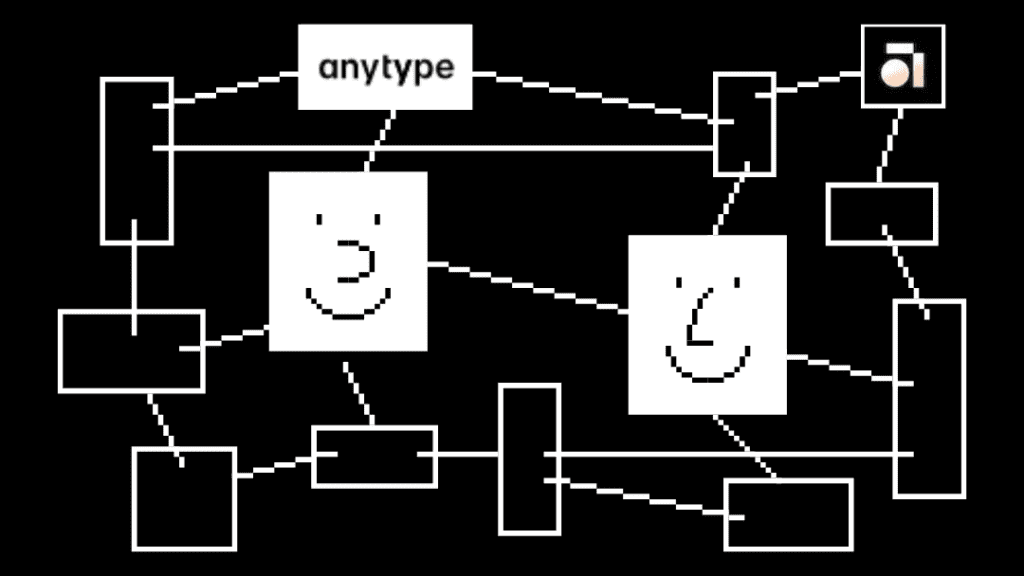
At its core, Anytype is an open-source alternative to tools like Notion and Evernote. It offers a quick yet powerful editor for notes, tasks, and documents. Everything within Anytype revolves around objects and their relationships. Instead of rigid databases, objects can be linked together in a customizable knowledge graph.
Some standout features include:
- End-to-end encryption: All data is encrypted locally before synchronizing across devices. The Anytype team claims no ability to access user data.
- Local-first architecture: Data is stored on your devices, enabling offline access and speedy performance.
- Relationships: Objects can be linked, surfacing connections across your knowledge base.
- Graph view: Visually maps the relationships between objects. Helpful in seeing information in a big-picture way.
- Templates: Reusable templates help create consistency for specific notes or document types.
- Peer-to-peer sync: Sync data directly between devices without relying on a central server.
- Markdown support: Import and export content in Markdown format. Helpful in migrating from other tools like Obsidian.
- Mobile apps: iOS and Android apps provide access on the go. Still in beta, though.
With its flexible building blocks and focus on privacy, Anytype shows promise as an alternative to popular but more locked-down options. I’m curious to see how its unique data modeling and visualization approach might benefit my needs as an entrepreneur.
Anytype Pros
As an entrepreneur who values privacy and control over my data, I see several advantages to using Anytype:
- Open source – Since Anytype is open-source, Anyone can inspect the codebase and contribute. Open-source projects empower user autonomy.
- Local-first architecture – With data encryption and storage occurring locally on my devices, I don’t need to worry about privacy violations from remote servers getting hacked.
- End-to-end encryption – My data is encrypted locally using keys only I control. The Anytype team has no access, unlike more centralized competitors like Notion.
- Relationships and graph view – The ability to visually map connections between objects unlock new insights into my knowledge. This sets Anytype apart from basic note apps like Obsidian.
- Peer-to-peer sync – I can selectively synchronize my data between devices as needed without relying on a central server. Useful for security and working offline.
- Markdown support – Since Anytype can import and export Markdown, migrating from other tools like Roam Research is straightforward.
- Template flexibility – Anytype’s mix-and-match building blocks allow me to create reusable templates tailored to my needs.
- Developer momentum – As an early beta, Anytype benefits from an engaged developer community rapidly building new features.
For entrepreneurs and professionals who value privacy, Anytype checks many boxes that alternatives like Notion currently lack. I’m excited to see how its unique approach pans out.

Anytype Cons
While Anytype shows a lot of potential as an early beta product, it also comes with some drawbacks:
- Still in beta – I need to be comfortable dealing with bugs and missing features during this stage of rapid development.
- Limited collaboration tools – Anytype currently lacks mature team workflows and permissions. This may improve over time.
- Steep learning curve – Anytype uses its unique building blocks, which take time to grasp compared to more familiar apps like Notion.
- Self-hosting requires technical skills – To fully own my data by self-hosting Anytype, I’d need to have server administration skills or hire someone.
- Mobile apps still in progress – Native iOS and Android apps are available but not fully stable compared to desktop apps.
- No integrations – Unlike established players, Anytype doesn’t yet connect widely with third-party apps and services.
- Small user base – With fewer users, Anytype lacks the content ecosystem of templates and tutorials that tools like Notion enjoy.
- No free tier – Anytype may introduce paid plans in the future after the beta period. Potentially limiting for smaller teams.
As an early adopter, you must work around these limitations for Anytype’s benefits. But more mainstream users may want to wait until the product is further refined.
Who Is Anytype For?

As an open-source alternative focused on privacy, Anytype will appeal most to the following users:
- Privacy-conscious professionals – Lawyers, journalists, healthcare workers, and others dealing with sensitive data will appreciate Anytype’s end-to-end encryption and local-first architecture.
- Open-source enthusiasts – Those embedded in open-source tools like Linux and Markdown will appreciate Anytype’s commitment to transparency and user control.
- Knowledge workers – People who think in interconnected ideas can benefit from Anytype’s relationships and graph view for notes and research.
- Self-hosters – For users who self-host data solutions like email or file storage, Anytype provides a logical next step for private notes and tasks.
- Decentralized web advocates – Anytype’s peer-to-peer syncing aligns with a broader vision for the internet’s future based on open standards.
- Students and academics – Those managing research and learning will find Anytype’s flexibility useful for organizing sources and synthesizing concepts.
- Indie developers – The Anytype codebase allows developers to build customized solutions.
- Privacy-focused teams – Startup teams concerned about data breaches may find Anytype’s security features offer peace of mind.
For mainstream users who prioritize collaboration features or integrations over privacy, more mature tools like Notion may be better suited for now. But for certain niches, Anytype’s unique approach provides real benefits today.
Conclusion
As an entrepreneur who values privacy and user control, I find Anytype’s approach compelling. Its local-first architecture, end-to-end encryption, and flexible data modeling align with my needs.
For note-taking and knowledge management, Anytype enables both freeform thinking and systematic organization. Its unique relationship framework unlocks insights not possible in rigid database models.
However, Anytype’s early beta status means compromises around stability, features, integrations, and learnability. More established tools like Notion may be better equipped for larger teams and mainstream use.
But for certain niches like privacy-focused professionals or open-source enthusiasts, Anytype deserves consideration. Its open ecosystem provides opportunities for customization and community-driven extensibility, lacking in closed competitors.
As Anytype continues developing, it has the potential to bring a fresh perspective to personal knowledge management and team collaboration. With its user-first ethos, I look forward to seeing how the platform evolves. For now, Anytype is on the watch list, a spot in my productivity stack – and it may also earn a place in yours.
