Why is time management important for students?
Time management is crucial for students because it allows them to stay organized and focused on their studies. Students can prioritize tasks, set realistic goals, and create a balanced schedule by managing their time effectively. This helps them stay on track with their assignments and deadlines and allows them to engage in other activities, such as extracurriculars or hobbies. Also, good time management skills can reduce stress and improve overall productivity, enabling students to achieve academic goals while maintaining a healthy work-life balance.
Benefits of effective time management
Effective time management has numerous benefits for students. Students can prioritize their tasks, avoid procrastination, and stay organized by managing their time effectively. This helps them meet deadlines and achieve academic success, reduces stress, and improves work-life balance.
Additionally, effective time management enables students to make the most of their study sessions, leading to improved concentration and retention of information. Incorporating effective time management strategies into their daily routine can significantly enhance a student’s productivity and overall well-being.
Common time management challenges for students
Time management can be a real struggle for students, and it’s no wonder why. With classes, homework, extracurricular activities, and social commitments, it can feel like there’s never enough time in the day.
One common challenge is the temptation to procrastinate. It’s easy to put off studying or completing assignments until the last minute, but this is often significant to stress and lower-quality work.
Another challenge is balancing competing priorities. Students often have multiple deadlines and responsibilities to juggle, making it difficult to prioritize tasks effectively.
Lastly, distractions can be a significant obstacle to effective time management. Whether it’s social media, Netflix, or just chatting with friends, students must find ways to minimize distractions and stay focused on their work.
Overcoming these challenges requires self-discipline, organization, and the ability to allocate time wisely. Students can boost their productivity and achieve their goals by recognizing the typical time management challenges and implementing strategies to overcome them.
Setting Goals
Identifying your priorities
When managing your time effectively as a student, one of the first steps is identifying your priorities. This means reflecting on what truly matters and what you want to achieve. It’s essential to consider both short-term and long-term goals and any deadlines or commitments you have.
By understanding your priorities, you can make informed decisions about how to allocate your time and energy. Remember, saying no to activities or tasks that don’t align with your priorities is okay. Prioritizing your time will not only help you stay focused and organized, but it will also allow you to make the most of your college experience.
SMART goal setting
Setting SMART goals is a crucial step in boosting productivity. SMART stands for Specific, Measurable, Achievable, Relevant, and Time-bound. By setting specific goals, you have a clear direction and know exactly what you want to achieve. Making your goals measurable allows you to track your progress and stay motivated. Setting achievable goals is essential so you don’t get overwhelmed or discouraged.
Furthermore, ensuring your goals are relevant to your studies or personal growth will help you stay focused and motivated. Lastly, setting a time-bound deadline for your purposes will create a sense of urgency and help you prioritize your tasks effectively. So, remember to apply the SMART goal-setting method to maximize your productivity and achieve your desired outcomes!
Breaking down goals into actionable steps
When it comes to achieving our goals, it can often feel overwhelming to think about the big picture. That’s why breaking down our goals into actionable steps is crucial. By breaking down our goals into smaller, more manageable tasks, we can create a roadmap that guides us toward success.
Whether studying for an exam, completing a project, or improving a skill, breaking down our goals allows us to focus on one step at a time, making the process less intimidating and more achievable. So, the next time you have a goal, remember to break it down into actionable steps and watch your productivity soar!
Creating a Schedule

Finding your most productive time
Finding your most productive time is essential for maximizing your efficiency as a student. We all have different times of the day when we feel more energized and focused. Some of us are early birds, ready to tackle the world as soon as the sun rises. Others are night owls, finding their creative flow when the rest of the world is asleep.
Whatever your preference, it’s essential to identify and embrace your most productive time. Doing so allows you to schedule your most challenging tasks and important studying sessions during this period, ensuring you make the most of your time and effectively achieve your goals. So, take some time to reflect and experiment with different time slots to find your most productive time and watch your productivity soar!
Allocating time for different tasks
When managing your time effectively as a student, one of the key strategies is allocating time for different tasks. This means setting aside specific periods for studying, attending classes, completing assignments, and engaging in extracurricular activities. By creating a schedule and sticking to it, you can ensure dedicated time for each aspect of your academic and personal life.
Allocating time for different tasks not only helps you stay organized but also allows you to make the most of your day and maximize your productivity. So, whether blocking off study sessions in the library or scheduling time for relaxation and self-care, finding a balance and allocating time for each task is essential for succeeding.
Using tools and apps for scheduling
When managing your time effectively as a student, using tools and apps for scheduling can be a game-changer. With the wide range of options available, you can find the perfect tool that suits your needs and preferences. Whether a simple calendar app or a more advanced task management tool, these tools can help you stay organized, prioritize your tasks, and maximize your time.
Plus, they often have features like reminders and notifications to keep you on track. So, instead of relying on your memory or a traditional paper planner, consider exploring the world of scheduling tools and apps to boost your productivity and make your student life more manageable.
Prioritizing Tasks

Urgent vs. important tasks
When managing your time effectively as a student, it’s crucial to understand the difference between urgent and important tasks. Critical tasks are those that require immediate attention and have a deadline, while important tasks are those that contribute to your long-term goals and overall success.
It’s easy to get caught up in the urgency of deadlines and prioritize them over essential tasks, but this can lead to a cycle of constantly putting out fires instead of making progress. By prioritizing essential tasks and managing urgent tasks efficiently, you can strike a balance and boost your productivity as a student.
Using the Eisenhower Matrix
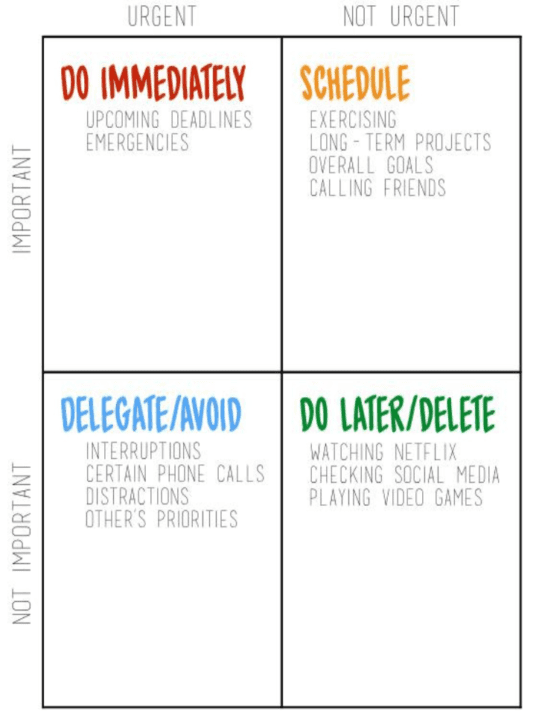
The Eisenhower Matrix is a powerful tool that can help students prioritize their tasks and maximize their time. It is named after former US President Dwight D. Eisenhower, who famously said, ‘What is important is seldom urgent, and what is urgent is seldom important.’
The matrix categorizes tasks into four quadrants: urgent and important, important but not urgent, urgent but not necessary, and neither urgent nor essential. Using this matrix, students can identify which tasks require immediate attention and which can be postponed or delegated. This allows them to focus on the most critical tasks and avoid wasting time on trivial or non-essential activities.
So, if you’re feeling overwhelmed with your workload, try the Eisenhower Matrix and watch your productivity soar!
Avoiding procrastination
Procrastination is something that many students struggle with, but it can be a significant obstacle to productivity. It’s easy to put off tasks and convince ourselves that we’ll do them later, but this often leads to unnecessary stress and last-minute cramming.
Setting clear goals and creating a schedule with specific deadlines for each task is essential to avoid falling into the procrastination trap. Breaking larger tasks into smaller, more manageable chunks can make them feel less overwhelming.
Additionally, finding ways to stay motivated, such as rewarding yourself after completing a task, can help combat the temptation to procrastinate. Remember, the key to avoiding procrastination is to keep focused and disciplined, even when the allure of procrastination is strong.
Managing Distractions

Identifying common distractions
When managing our time effectively, one of our biggest challenges as students is dealing with everyday distractions. From social media notifications to the temptation of binge-watching our favorite TV shows, countless things can divert our attention away from our studies.
Identifying these distractions and finding strategies to minimize their impact on productivity is essential. By understanding what distracts us the most and implementing techniques such as setting specific study hours, turning off notifications, and creating a designated study space, we can create a focused and distraction-free environment to make the most of our time.
Creating a distraction-free environment
Creating a distraction-free environment is crucial for maximizing productivity as a student. With the constant influx of notifications, social media updates, and other distractions, staying focused on studying or completing assignments can be challenging.
One effective strategy is to designate a specific study area to minimize distractions. This could be a quiet corner in your room, a library, or a coffee shop.
Additionally, turning off notifications on your phone or using apps blocking access to social media during study sessions is essential.
Creating a distraction-free environment can optimize your concentration and maximize your study time.
Using techniques to stay focused
Staying focused can be challenging, especially for students juggling multiple responsibilities. But fear not; there are techniques you can use to help you stay on track.
- One effective method is to break your tasks into smaller, more manageable chunks. This makes them less overwhelming and allows you to prioritize and tackle them one at a time.
- Another helpful technique is to eliminate distractions. Put your phone on silent, close unnecessary tabs on your computer, and find a quiet space to concentrate.
- Lastly, don’t forget to take regular breaks. Studies have shown that taking short breaks can improve productivity and prevent burnout.
So, the next time you struggle to stay focused, try these techniques and watch your productivity soar!
Taking Breaks and Rest

The importance of breaks for productivity
When it comes to boosting productivity, one often overlooked aspect is the importance of breaks. Many students believe working non-stop for extended periods will lead to better results. However, research has shown regular intervals improve focus, concentration, and productivity.
One key factor in maximizing the benefits of breaks is task prioritization. By prioritizing tasks and taking strategic breaks in between, students can ensure that they are making the most of their time and energy.
This approach allows for better time management and prevents burnout. So, the next time you find yourself overwhelmed with a long to-do list, remember the importance of breaks and how task prioritization can help you stay productive and avoid feeling overwhelmed.
Different types of breaks
When it comes to taking breaks, different types can help boost productivity. One type of break is a short physical break, where you get up and stretch your legs or do a quick exercise. This can help refresh your mind and body, allowing you to focus better when you return to your tasks.
Another type of break is a mental break, where you give your brain a rest from intense concentration. This can be achieved by engaging in a hobby or doing something enjoyable that doesn’t require much mental effort.
Lastly, social breaks can also be beneficial. Chatting with a friend or colleague can provide a much-needed break from work and help improve your mood and overall productivity. So, mix up your leaves and try different types to find what works best for you!
Practicing self-care for better focus
Practicing self-care is essential for better focus and productivity as a student. It’s easy to get caught up in the demands of schoolwork and extracurricular activities, but taking the time to prioritize your well-being can make a world of difference.
Whether getting enough sleep, eating nutritious meals, or taking breaks, self-care recharges your mind and body. By making self-care a priority, you’ll find yourself more focused, energized, and ready to tackle any challenge that comes your way.
In Conclusion
Time management is an essential skill for students to master to boost productivity and achieve academic success. Students can optimize their time and energy by implementing strategies like setting SMART goals, creating schedules, prioritizing tasks, minimizing distractions, and taking breaks. Finding a system that works for your needs and preferences is key.
Start by identifying your biggest time management challenges and pain points. Then, slowly incorporate the time management techniques covered in this article to address those issues. Building these skills takes patience and practice, but the payoff is immense. Effective time management allows you to juggle classes, assignments, extracurriculars, and personal life while reducing stress.
Remember that boosting productivity requires self-discipline and commitment. Stay focused on your goals and be diligent about your schedule and priorities. Seek support from academic advisors, professors, or peers when needed. With persistence, these strategies will improve efficiency, heighten focus, and more extraordinary academic achievement.
