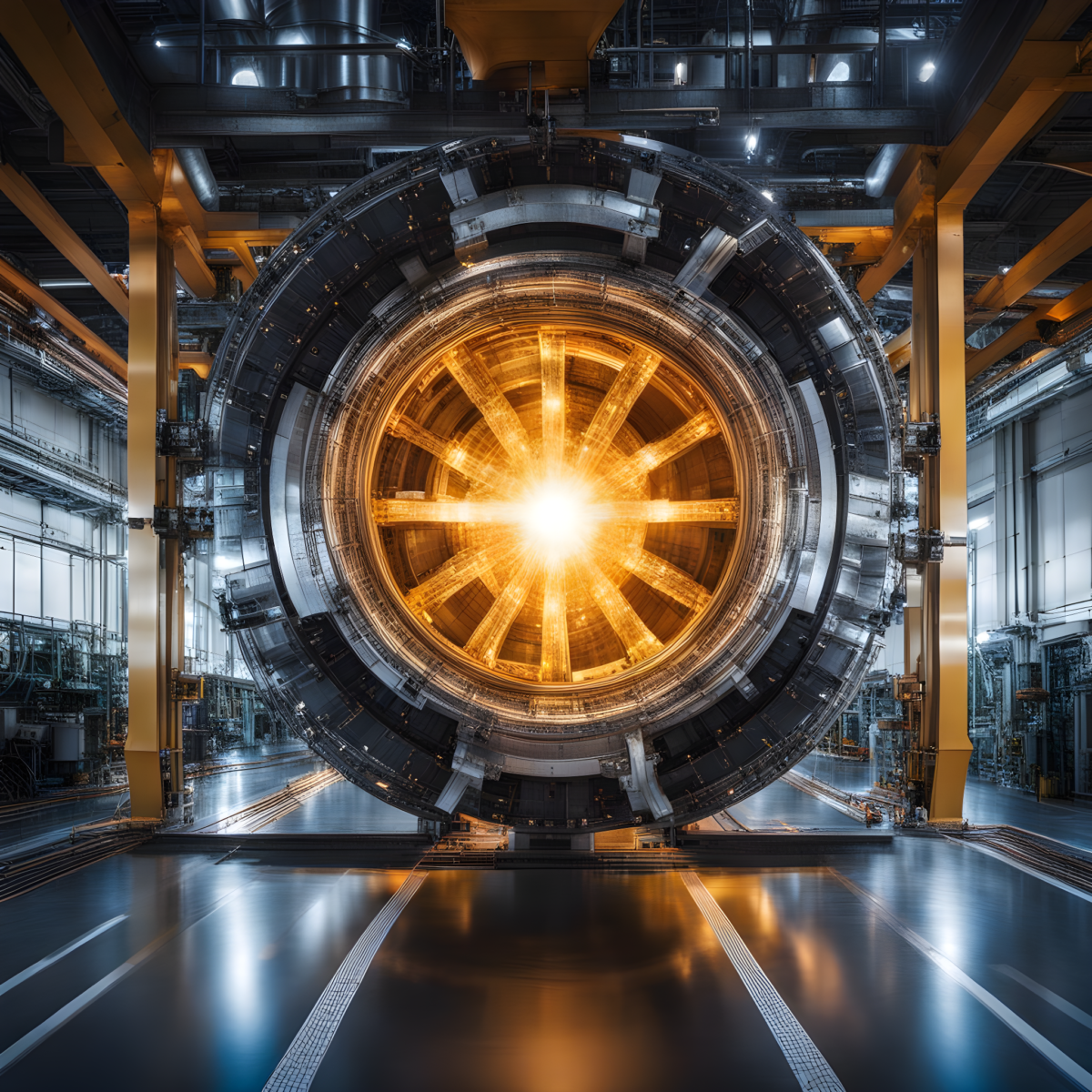
The future of sustainable energy is looking brighter, thanks to DeepMind nuclear fusion research advances. By harnessing the power of artificial intelligence (AI), machine learning, and advanced computing, scientists are making significant progress in unlocking the potential of fusion energy.
With the world facing climate change and dependence on fossil fuels, the need for clean and abundant energy sources has never been greater. DeepMind nuclear fusion has the potential to provide a solution that is both sustainable and economically viable.
Key Takeaways:
- DeepMind nuclear fusion research is revolutionizing the energy sector by leveraging the power of AI, machine learning, and advanced computing.
- The promise of DeepMind nuclear fusion includes clean and abundant energy generation, reduced dependence on fossil fuels, and mitigating climate change.
- AI and machine learning techniques transform nuclear fusion research by enabling scientists to understand better and control plasma behavior.
- DeepMind plays a crucial role in fusion energy research by optimizing reactor design, plasma stability, and energy confinement through AI algorithms.
Skip to the FAQ here.
The Promise of DeepMind Nuclear Fusion
DeepMind nuclear fusion has the potential to revolutionize the energy sector, offering clean and abundant energy generation while reducing dependence on fossil fuels and mitigating climate change. The promise of this technology lies in its ability to optimize fusion processes through the application of artificial intelligence (AI) and machine learning techniques.
With deep learning algorithms and advanced computing, DeepMind fusion research is driving progress in understanding and controlling plasma behavior. By modeling and simulating fusion reactions, neural networks can predict plasma behavior with remarkable accuracy, making it possible to fine-tune energy confinement and stabilize reactors for more efficient and commercially viable fusion power plants.
The use of AI-powered nuclear fusion in energy generation offers a promising future, as it has the potential to provide a stable and sustainable energy source that can be harnessed for decades to come. The impact of AI in nuclear fusion is significant as it accelerates research progress and offers innovative solutions to some of our most pressing global challenges.
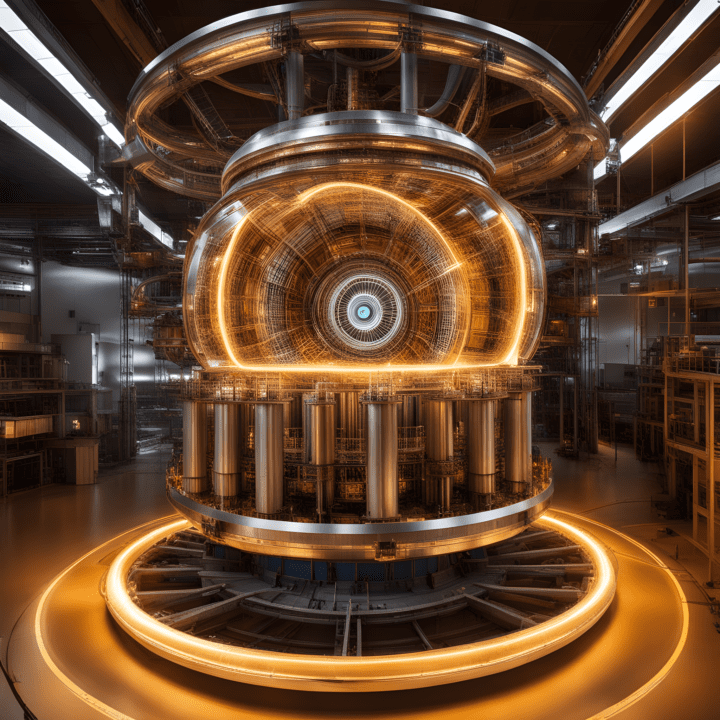
“We are on the cusp of a fusion energy revolution that could change the world as we know it. By using AI and machine learning to optimize reactor design, plasma stability, and energy confinement, we can achieve a clean and abundant energy future that is economically and environmentally sustainable.”
– Professor Yuki Kato, fusion energy researcher at the National Institute for Fusion Science in Japan.
AI in Nuclear Fusion: Revolutionizing Research
The application of advanced computing and machine learning techniques is rapidly transforming nuclear fusion research. DeepMind’s fusion research team is at the forefront of this revolution, leveraging cutting-edge AI algorithms to accelerate progress toward a sustainable energy future.
Researchers can use deep learning models and neural networks to simulate complex plasma behaviors in fusion reactors. This allows them to study the dynamics of plasma turbulence, which is a primary factor influencing the success of any fusion reaction.
DeepMind’s fusion research team has developed powerful algorithms to identify patterns in large datasets, revealing important insights into the underlying physics of fusion reactions. By analyzing these patterns, researchers can optimize the design of fusion reactors and improve energy confinement.
The use of machine learning also enables real-time control of fusion reactions. This is crucial for maintaining the stability of the plasma, as any disruptions can cause the reactor to shut down. DeepMind’s fusion research team has developed deep reinforcement learning algorithms that can make real-time adjustments to reactor parameters, ensuring a stable and sustained fusion reaction.
Overall, AI-powered fusion research has the potential to accelerate progress toward a sustainable energy future by providing a deeper understanding of plasma behavior and optimizing reactor design. With continued investment and collaboration, the fusion energy sector could emerge as a leading source of clean and abundant energy for future generations.
DeepMind Fusion Research
DeepMind has made significant contributions to nuclear fusion through its fusion research team. Using sophisticated machine learning algorithms and advanced computing techniques, the team has achieved breakthroughs in understanding and controlling plasma behavior, optimizing reactor design, and improving energy confinement.
One example of DeepMind’s contributions is the development of the Optometrist algorithm, designed to optimize reactor design. This algorithm uses machine learning to predict the behavior of plasma in different reactor configurations, allowing researchers to quickly and accurately identify the most promising designs.
Another critical area of focus for DeepMind’s fusion research team is the development of advanced control systems. These systems use deep reinforcement learning algorithms to make real-time adjustments to reactor parameters, ensuring a stable and sustained fusion reaction. By providing greater control over plasma behavior, these systems could help make fusion energy a practical and commercially viable energy source.
| AI in Nuclear Fusion | Machine Learning in Nuclear Fusion | DeepMind Fusion Research | Artificial Intelligence in Fusion Energy | DeepMind Fusion Algorithms |
|---|---|---|---|---|
| Accelerating progress in fusion research | Simulating plasma behavior and optimizing reactor design | Developing advanced control systems for stable and sustained fusion reactions | Enabling greater understanding of plasma behavior and optimizing energy confinement | Identifying patterns in large datasets to reveal insights into the underlying physics of fusion reactions |
DeepMind’s Role in Fusion Energy Research
DeepMind is making significant contributions to fusion energy research by harnessing the power of artificial intelligence. The company’s deep learning algorithms optimize reactor design, plasma stability, and energy confinement, ultimately paving the way for more efficient and commercially viable fusion power plants.
With DeepMind’s AI-powered nuclear fusion, scientists can better understand the complex physics of fusion reactions and develop new ways to control and sustain plasma. DeepMind fusion research also explores the potential of using AI algorithms to improve the performance of fusion reactors in real-time, ensuring stable and reliable operation.
DeepMind’s fusion algorithms are based on machine learning techniques that enable the system to learn from past experiences and predict future behavior. This allows scientists to run simulations and experiments with greater accuracy and speed, reducing the cost and time required for testing new ideas.
Through its deepmind fusion research, the company is also exploring new materials and technologies to enhance the efficiency and safety of fusion power plants. By collaborating with other industry and academic partners, DeepMind is creating a roadmap for the future of fusion energy that is both sustainable and commercially viable.
Advancing Fusion Energy with Deep Learning
Deep learning plays an increasingly important role in fusion energy research, offering new possibilities for data analysis, prediction of plasma behavior, and real-time control systems. With the help of advanced computing techniques, such as neural networks and deep learning algorithms, scientists are gaining deeper insights into the complexities of nuclear fusion reactions and developing more effective strategies for harnessing its immense energy potential.
Deep learning in fusion energy research is still in its early stages but has already shown promising results. By leveraging advanced computing power and sophisticated algorithms, scientists have achieved greater accuracy and reliability in their calculations, leading to more informed decisions about reactor design and operation.
One example of how deep learning is advancing fusion energy research is in the area of plasma stability. Plasma instabilities can significantly hinder the performance of fusion reactors, but deep learning algorithms have shown promise in predicting and controlling these instabilities in real-time. By feeding large amounts of data into neural networks, scientists have developed more accurate plasma models and control systems that can respond quickly to changes in plasma behavior.
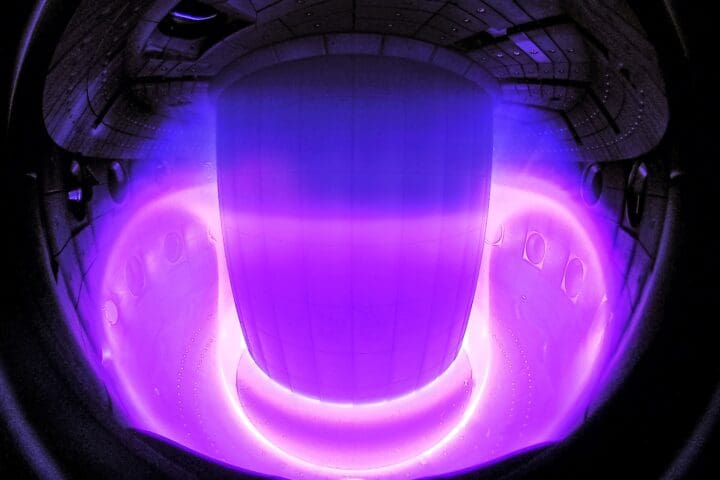
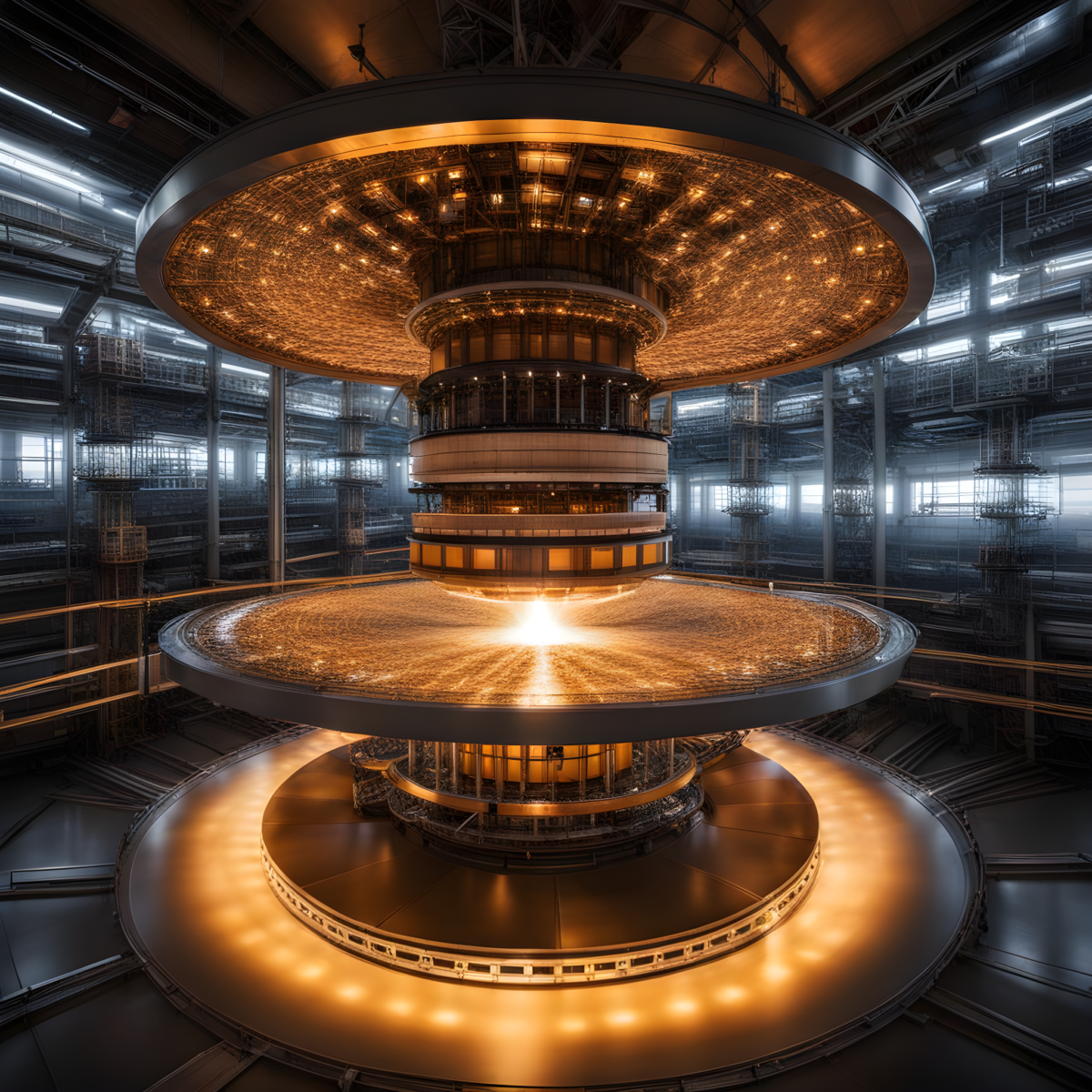
This image shows a simulation of a fusion reaction using neural network-based models. The simulation helps scientists gain a better understanding of the dynamics of plasma behavior and optimize reactor design.
Moreover, deep learning techniques enable more efficient data analysis, allowing scientists to quickly sift through vast amounts of data generated from experiments and simulations. This, in turn, will enable researchers to identify patterns and trends that might otherwise be difficult to discern, leading to more informed decisions about experimental design and data interpretation.
Finally, deep learning in fusion energy research opens up new avenues for collaboration and knowledge sharing. With the vast amounts of data generated by experiments and models, scientists can now share data and collaborate on research projects in previously impossible ways.
In conclusion, DeepMind’s fusion research is at the forefront of developing new AI-powered technologies to advance fusion systems and continues to make significant contributions to this field. By harnessing the power of deep learning and advanced computing, DeepMind and other researchers are making great strides in unlocking the full potential of nuclear fusion as a source of clean, abundant, and sustainable energy for the future.
The Future Implications of DeepMind Nuclear Fusion
DeepMind’s research on nuclear fusion has the potential to revolutionize the energy sector, which could have far-reaching implications for the future. By harnessing the power of AI, DeepMind’s fusion research is paving the way for a more stable and sustainable energy source that could help address the pressing challenges of climate change and global energy demands.
The use of AI in nuclear fusion is still in its early stages, but the progress made so far suggests that it could be a game-changer. The intelligent algorithms developed by DeepMind are enabling researchers to understand better and control plasma behavior, a critical factor in achieving successful fusion. This level of precision and control has the potential to increase significantly the efficiency of fusion reactors, making them more commercially viable.
The promise of AI in fusion energy extends beyond simply improving efficiency and reducing reliance on fossil fuels. By addressing the issue of climate change, AI-powered fusion energy could have a positive impact on global economic stability and social well-being. It could lead to the creation of new industries, higher-paying jobs, and a cleaner environment.
Of course, many challenges remain to overcome before AI-powered fusion energy becomes a reality. These include developing new materials that can withstand the extreme conditions of fusion reactors and scaling up AI-driven simulations to create more accurate models of plasma behavior. However, these challenges can be overcome with continued investment and collaboration between academia, industry, and government agencies.
Looking ahead, the future of AI in nuclear fusion is bright. The potential benefits of this technology are enormous, and the ongoing research by DeepMind and other organizations gives reason to be optimistic. As breakthroughs are made in this field, we can expect to see a cleaner, more sustainable energy system that benefits all members of society.
Challenges and Opportunities in DeepMind Fusion Research
As with any emerging technology, deep learning in nuclear fusion presents challenges and opportunities. One of the primary challenges is the high computational power required to run AI-driven simulations. Modeling complex plasma behavior and reactor design necessitates using advanced computing resources like supercomputers and cloud computing platforms. Furthermore, developing new algorithms and neural networks that can analyze vast amounts of data in real-time requires significant resources and expertise.
Another challenge is the need for new materials and technologies to withstand the harsh conditions of fusion reactions. The intense heat and radiation generated during these reactions can compromise reactor components and reduce efficiency. Researchers are working to develop new materials and technologies that can withstand these conditions and improve reactor performance.
Despite these challenges, the opportunities presented by DeepMind fusion research are vast. AI-enabled simulations and modeling can provide new insights into plasma behavior and the optimal design of fusion reactors. This can lead to more efficient and commercially viable fusion power plants, reducing dependence on fossil fuels and mitigating climate change.
Moreover, DeepMind fusion research can benefit from collaboration between academia, industry, and government agencies. Researchers can accelerate progress and overcome obstacles by combining resources and expertise. Governments worldwide are investing in fusion research, recognizing the potential for fusion energy to provide a sustainable and secure energy source for future generations.
While DeepMind nuclear fusion presents challenges, the opportunities for progress and change are significant. By addressing these challenges through collaboration and investment, researchers can continue to advance our understanding of fusion energy and bring this promising technology to fruition.
The Path Forward: Commercializing AI in Fusion Energy
As AI and machine learning continue to drive progress in fusion energy research, the next step is to translate these findings into practical applications. The commercialization of AI in fusion energy has the potential to revolutionize the energy sector, providing a sustainable and abundant energy source that can mitigate climate change and reduce dependence on fossil fuels.
Private companies and startups play a crucial role in this process, investing in AI-powered fusion research and developing new technologies and materials to optimize reactor design and plasma stability. The Department of Energy’s Fusion Energy Sciences program also supports research in this field, funding collaborative projects between industry and academia.
One promising avenue for commercializing AI in fusion energy is through public-private partnerships, where industry and government agencies work together to advance research and development. These partnerships can help bridge the gap between basic research and commercialization, providing the necessary resources and infrastructure to bring AI-powered fusion energy solutions to market.
Ultimately, the successful commercialization of AI in fusion energy will depend on a range of factors, including funding, technological readiness, and public support. However, with continued investment and collaboration, AI-powered fusion energy can become a reality, providing a clean and sustainable energy source for future generations.
The Conclusion
The potential of DeepMind nuclear fusion and AI in revolutionizing the energy sector is immense. Developing sustainable and clean energy solutions is critical to reducing the impact of climate change and meeting the growing electricity demand. The intersection of artificial intelligence and nuclear fusion research has the potential to unlock breakthroughs in plasma physics and reactor design, leading to more efficient, safe, and commercially viable fusion power plants.
As research progresses, the path forward for commercializing AI in fusion energy looks promising. Private companies, startups, and government initiatives are critical in advancing fusion research and translating laboratory findings into practical applications. The potential economic and environmental benefits of AI-powered fusion energy solutions are enormous and could profoundly impact society.
In conclusion, DeepMind nuclear fusion and AI in nuclear fusion are two critical areas of innovation that hold great promise for the future of energy generation. Ongoing research and collaboration between academia, industry, and governments will be essential for realizing this vision. As we move forward, fusion energy has the potential to be a game-changer, providing a stable and sustainable source of energy for generations to come.
FAQ
Q: What is DeepMind nuclear fusion?
A: DeepMind nuclear fusion refers to the application of artificial intelligence and machine learning techniques developed by DeepMind to advance research and development in the field of fusion energy. It aims to harness the power of fusion reactions as a clean and sustainable energy source.
Q: How does AI contribute to nuclear fusion research?
A: AI plays a crucial role in nuclear fusion research by utilizing advanced computing and neural networks to simulate and model fusion reactions. It enables scientists to understand better and control plasma behavior, optimize reactor design, and improve energy confinement, ultimately accelerating progress in the field.
Q: What are the potential benefits of DeepMind nuclear fusion?
A: DeepMind nuclear fusion promises clean and abundant energy generation, reducing dependence on fossil fuels and mitigating climate change. It can potentially revolutionize the energy sector by providing a stable and sustainable power source.
Q: How can deep learning techniques contribute to fusion energy research?
A: Deep learning techniques are applied to fusion energy research to enhance data analysis, predict plasma behavior, and develop real-time control systems. This enables more accurate and reliable fusion operations, bringing us closer to viable fusion power plants.
Q: What are the challenges and opportunities in DeepMind fusion research?
A: DeepMind fusion research faces challenges such as the need for substantial computational power for AI-driven simulations and the development of new materials and technologies. However, it also presents opportunities for collaboration between academia, industry, and government agencies to overcome these obstacles and unlock the potential of fusion energy.
Q: What is the path forward for commercializing AI in fusion energy?
A: The path forward for commercializing AI in fusion energy involves the involvement of private companies, startups, and government initiatives to translate research findings into practical applications. It holds the potential for significant economic and environmental impact, paving the way for a sustainable energy future.
