DLSS, or Deep Learning Super Sampling, is an AI-based technology generating much buzz in the media. But what exactly is it?
According to NVIDIA’s CEO, Jensen Huang, DLSS is a system that generates every pixel on your screen for computer games and virtual worlds rather than rendering them. This may sound impossible, but it is a revolutionary way of dramatically speeding up gaming experiences.
DLSS 3.5 can generate over 85% of the pixels on the screen, making it more than 20,000 times faster than traditional rendering techniques. By utilizing super-resolution and optical flow, DLSS can synthesize missing details and create smoother frames, enhancing the gaming experience. And the best part? DLSS is available to all RTX graphics card owners, even those with older models, breathing new life into aging hardware.
But the advancements in DLSS technology don’t stop there. NVIDIA has recently introduced DLSS 3.5, which incorporates ray reconstruction to improve image quality further. Typically, ray tracing involves simulating the path of millions of rays to create an image, but this process can be time-consuming and result in noisy or distorted images. However, with AI-powered ray reconstruction, the image quality is significantly enhanced, retaining high-frequency details and improving overall image clarity. While DLSS is imperfect and may have limitations, it is an incredible breakthrough that is revolutionizing the gaming industry and providing users with a faster and more immersive gaming experience.
Understanding DLSS
DLSS, or Deep Learning Super Sampling, is an AI-based technology that has been garnering a lot of attention in the media. It is touted to dramatically speed up computer games and virtual worlds. At first glance, it may seem impossible that every pixel on the screen can be generated by an AI rather than rendered in real-time. However, DLSS has made significant advancements over the years and has proven capable of generating a large portion of the pixels on the screen.
In 2018, there was an attempt to generate photorealistic images of material models using ray tracing quickly. However, this method was quite time-consuming, taking up to 40 to 60 seconds to create an image. To overcome this limitation, researchers turned to neural rendering, which utilized AI to synthesize images in real time. The results were remarkable, with neural rendering being 20,000 times faster than traditional ray tracing methods.
DLSS takes this concept further by combining hardware and software to create an immersive gaming experience. DLSS version 3 generates 7 out of every 8 pixels on the screen. This means that over 85% of the pixels are generated by AI rather than being computed using traditional techniques like ray tracing. This is a significant achievement and can potentially revolutionize the gaming industry.
How DLSS Works: The Technical Aspects
DLSS operates by utilizing artificial intelligence in combination with hardware and software. This fusion of technologies allows for generating high-quality images and improved performance in games and virtual worlds. DLSS version 3, in particular, showcases the technical advancements in the field.
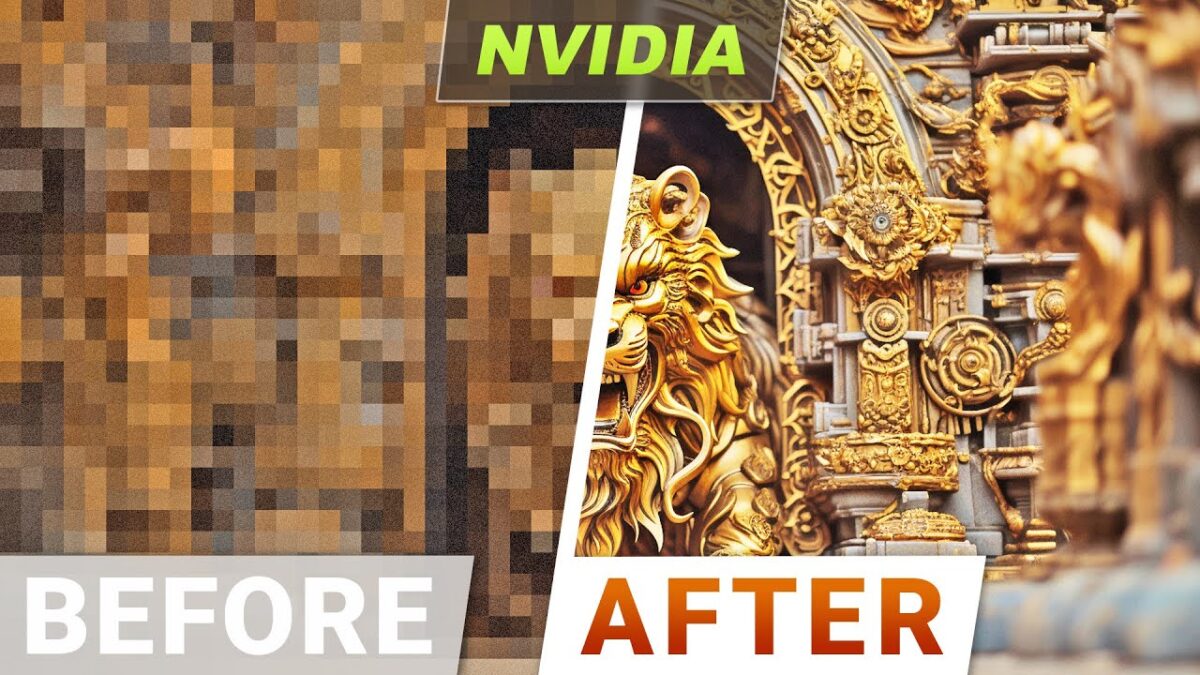
One of the critical components of DLSS is super-resolution. This process involves taking a coarse image and using AI to fill in the missing details. The AI can synthesize missing details by pretending the coarse image is fine, creating a high-resolution image in real-time.
Another vital aspect is optical flow. By analyzing two adjacent video game frames, AI can estimate what has occurred between those frames and predict where objects are moving. This technique enables the synthesis of intermediate structures, resulting in smoother gameplay even on hardware that would otherwise struggle to run the game.
DLSS version 3 also introduces ray reconstruction, which is aimed at further improving image quality. Traditional ray tracing simulations involve simulating the path of millions of rays, but this process can be time-consuming and result in a noisy image. Ray reconstruction leverages AI to retain high-frequency information and improve the overall quality of the image. This technique ensures that the highest quality information is available before the upscaling step, leading to a more realistic and visually appealing gaming experience.
DLSS combines various technical aspects to improve image quality, smoothness, and performance in gaming and virtual worlds.
The Process of DLSS
DLSS follows a specific process to generate high-quality images and enhance gameplay.
The first step in DLSS is super-resolution. This involves taking a low-resolution or coarse image and using AI to determine the missing details that would be present in a high-resolution image. The AI synthesizes those details, resulting in a high-resolution image in real-time.
The second step is optical flow. By analyzing the movement of objects between two adjacent frames, AI can predict the motion and position of those objects. This allows for synthesizing intermediate frames, creating the illusion of smoother gameplay.
It’s important to note that DLSS combines the outputs of super-resolution and optical flow with a pool of computed pixels. By blending the generated pixels with the computed ones, DLSS balances image quality and smoothness.
Combining these steps in DLSS leads to significant improvements in image quality and overall gaming experience.
The Evolution: DLSS 3.5
DLSS 3.5 represents the latest advancement in DLSS technology, further enhancing the gaming experience.
DLSS 3.5 focuses on improving image quality through a process known as ray reconstruction. Traditional ray tracing simulations involve simulating the path of millions of rays, which can be time-consuming and result in noisy images. To address this, DLSS 3.5 leverages AI and learns from vast training data to generate more accurate and realistic images.
Ray reconstruction specifically targets high-frequency information retention. This means that fine details, such as shadows and reflections, are preserved, ensuring a more visually appealing and immersive gaming experience. DLSS 3.5 significantly improves the denoising techniques used in previous versions by retaining high-frequency information.
The introduction of ray reconstruction in DLSS 3.5 showcases the commitment to pushing the boundaries of image quality and ultimately providing users with a more lifelike gaming experience.

Ray Tracing and Its Challenges
To understand the significance of DLSS, it’s essential to discuss the challenges inherent in ray tracing, a widely used technique in computer graphics.
Ray tracing involves simulating the path of rays as they interact with virtual objects to create realistic lighting and reflections. While ray tracing generates highly accurate images, it can be computationally intensive, requiring the simulation of millions of rays.
The primary challenge arises from the time required to perform ray tracing. Waiting hours for an image to render is not ideal for real-time applications such as gaming. Acceleration techniques, such as DLSS, seek to address this issue by improving the speed at which images are generated.
Another challenge is noise in ray-traced images. Due to the complex nature of ray tracing, images can have unwanted noise, resulting in a less visually pleasing final result. Denoising techniques have been developed to mitigate this issue, but they are imperfect and often introduce their own challenges.
Upscaling and Denoising: The DLSS Solution
DLSS tackles the challenges of upscaling and denoising in computer graphics, providing a comprehensive solution to improve image quality.
Maintaining the sharpness and integrity of the details can be a significant challenge when upscaling images. Traditional upscaling techniques often result in blurry or distorted images. DLSS addresses this issue by combining denoising and upscaling using the power of AI.
By utilizing AI for denoising and upscaling, DLSS ensures that the preserved details are accurate and visually appealing. AI allows for a more sophisticated approach, resulting in higher-quality upscaled images.
Additionally, DLSS introduces ray reconstruction as part of the process. This technique leverages AI to retain high-frequency information, improving image quality. The limitations of traditional denoising techniques can be overcome by integrating ray reconstruction into the overall DLSS workflow.
Overall, DLSS offers a promising solution to the challenges of upscaling and denoising, providing users with visually stunning images and an enhanced gaming experience.

DLSS 3.5: A Step Forward
DLSS 3.5 represents a significant step forward in the evolution of DLSS technology, providing notable improvements in image quality.
Training plays a crucial role in DLSS 3.5. The AI models behind DLSS 3.5 have been trained on a significantly larger dataset than previous versions, incorporating five times more training data. This increased training helps refine the AI models and ensures more accurate and higher-quality image generation.
The fundamental improvement in DLSS 3.5 is its enhanced ability to improve image quality. DLSS 3.5 ensures that fine details are preserved by retaining high-frequency information through ray reconstruction. This advancement results in more lifelike and visually stunning images for gamers.
The benefits of DLSS 3.5 extend beyond image quality. The technology breathes new life into older graphics card models, offering enhanced performance and visuals. This accessibility allows more users to experience the benefits of DLSS and enjoy a smoother and more immersive gameplay experience.
Flaws and Potential Limitations of DLSS
While DLSS offers significant advancements in image generation and gaming performance, some flaws and potential limitations exist.
One major flaw of DLSS is the lack of peer-reviewed research papers providing a comprehensive analysis of the technology’s weaknesses. Without detailed research, it becomes challenging to identify potential flaws or failure cases accurately.
The validity and reliability of DLSS results can also be a concern. While DLSS aims to improve image quality and performance, there may be instances where it does not work as well or where some users may prefer not to use it. This variability in results can impact the overall user experience and satisfaction.
Additionally, DLSS technology is still in its early stages, and potential weaknesses may not be fully explored or disclosed. It is essential to recognize that DLSS is continuously evolving, and future developments may address some of these limitations.

Accessibility of DLSS Technology
DLSS technology is available to many users, provided they meet the hardware requirements.
DLSS is compatible with all RTX graphics cards, including older models that may be more affordable. This accessibility allows individuals with older hardware to benefit from the performance and image quality improvements DLSS offers.
However, it is essential to note that DLSS compatibility relies on the specific game or application being used. Not all games or applications are ready for DLSS, and compatibility may vary. Users should ensure that their chosen games or applications support DLSS 3.5 to fully take advantage of the technology’s benefits.
Overall, DLSS technology aims to make the advantages of AI-based image generation and improved gaming performance accessible to a broader audience.
The Future of DLSS and Conclusion
DLSS has significantly impacted the gaming industry, and its future is promising.
DLSS technology has been well-received in the gaming industry, with developers and gamers recognizing its potential for improving image quality and performance. As DLSS continues to evolve, its adoption is expected to continue to grow.
The future of DLSS holds exciting developments, with ongoing research and advancements in AI and graphics technology. It is anticipated that DLSS will become even more refined, delivering even higher levels of image quality and performance.
To recap, DLSS represents a fusion of hardware and software, leveraging AI to generate high-quality images in real-time. DLSS significantly enhances image quality and performance in gaming and virtual worlds by combining super-resolution, optical flow, and ray reconstruction.
While DLSS is not without its flaws and limitations, its accessibility and potential for improvement make it an exciting technology that has captivated the gaming industry. As DLSS continues to evolve, it has the potential to reshape the gaming experience and push the boundaries of what is possible in computer graphics.
