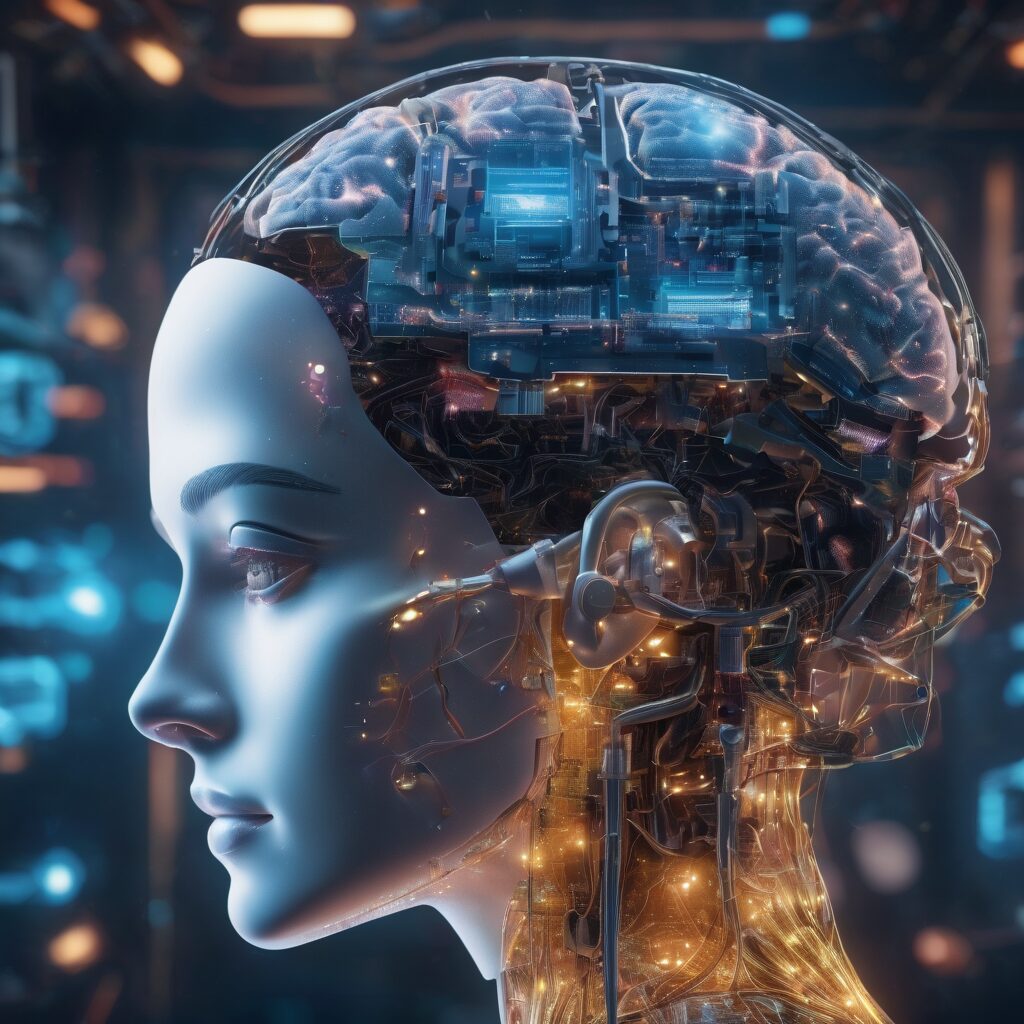
Artificial Intelligence (AI) has grown significantly in recent years, with innovative applications transforming various industries. One of the most crucial components of AI is deep learning, a machine learning technique that utilizes artificial neural networks to analyze and process complex data. Understanding the underlying patterns in large datasets allows deep learning algorithms to learn and improve continuously, making them ideal for a wide range of AI applications.
This section will introduce the common deep learning applications in AI. We will explore the concept of deep learning and its significance in AI while highlighting some popular AI use cases where deep learning plays a critical role.
Key Takeaways
- Deep learning is a machine learning technique that utilizes artificial neural networks to analyze and process complex data.
- Deep learning is crucial in various AI applications, enabling machines to learn and improve continuously.
- By understanding the underlying patterns in large datasets, deep learning algorithms can be used in image and video recognition, natural language processing, speech recognition, recommender systems, healthcare, finance, and autonomous vehicles.
In a hurry? Skip to the FAQ.
Understanding Deep Learning
Deep learning is a subset of machine learning that utilizes artificial neural networks to model and solve complex problems. Deep learning algorithms attempt to replicate the human brain’s ability to process and analyze large amounts of data.
One of the primary reasons deep learning has become increasingly popular in recent years is its ability to handle unstructured or raw data formats, including images, audio, and text. This functionality has opened up new opportunities for artificial intelligence (AI) use cases for deep learning in various applications, including healthcare, finance, and self-driving cars.
Deep learning algorithms can be trained to recognize patterns and features in data that may not be recognizable to the human eye. This has led to improved accuracy and performance in many AI applications. For example, deep learning models can recognize objects and classify them with high precision in image recognition.
Common Use Cases Deep Learning Applications in AI
The use cases for deep learning in artificial intelligence applications are numerous. Deep learning algorithms can analyze text, identify sentiment, and generate text responses in natural language processing. Similarly, deep learning models can convert speech into text with high accuracy in speech recognition, enabling voice-controlled assistants.
Deep learning has also been applied to recommender systems to provide personalized product or content recommendations, improving user experience.

Other popular AI use cases for deep learning include autonomous vehicles, where deep learning algorithms enable cars to detect and respond to objects and obstacles on the road, and finance, where deep learning models can assist in fraud detection and risk assessment.
Overall, deep learning is a powerful tool that has enabled significant advancements in artificial intelligence applications. Its ability to model and solve complex problems through artificial neural networks has opened up new opportunities and use cases for previously impossible AI.
Deep Learning in Image and Video Recognition
Deep learning has a wide range of applications in artificial intelligence, and one of the most popular uses of deep learning in AI is image and video recognition. Through deep learning algorithms, computers can be trained to recognize and classify photos and videos accurately, leading to significant advancements in various fields.
One of the most promising applications of deep learning in image recognition is in healthcare, where it is used for disease diagnosis and medical image analysis. It has also been used in facial recognition and object detection security systems. In addition, self-driving cars rely heavily on deep learning algorithms for image and video recognition to navigate safely on the road.
Deep learning has also been used to improve the accuracy of image and video search engines, making it easier for users to find what they’re looking for online. By analyzing the visual features of images and videos, deep learning algorithms can recognize and group them based on common characteristics.
One of the key benefits of using deep learning in image and video recognition is its ability to learn and improve over time. As more data is fed into the system, the algorithm becomes more accurate at recognizing and categorizing images and videos.
Deep learning applications in image and video recognition are endless, and the technology is expected to become more sophisticated in the coming years. As computers continue to learn and improve their ability to recognize and classify visual data, we can expect significant breakthroughs in various fields.

Incorporating deep learning into image and video recognition enables computers to accurately recognize and classify photos and videos. It opens up a wide range of possibilities for technological advancement.
Natural Language Processing and Deep Learning
One of the most exciting applications of deep learning in AI technology is its intersection with natural language processing (NLP). With deep learning models, language understanding, sentiment analysis, and machine translation have significantly enhanced AI applications.
Deep learning algorithms can be trained on large datasets to understand the nuances of language, including syntax, semantics, and context, leading to more accurate and natural language processing. This has significant implications for industries such as customer service, where chatbots and virtual assistants can provide more effective and personalized support.
Sentiment analysis, which involves determining the emotions and opinions expressed in text, has also seen significant improvements through deep learning. This provides businesses and organizations with valuable insights into consumer attitudes and preferences.
Finally, deep learning has enabled more accurate and efficient machine translation, allowing individuals and businesses to communicate effectively across different languages and cultures. This has far-reaching implications for globalization and cross-cultural collaboration.

“The goal is to turn data into information, and information into insight.” – Carly Fiorina
Deep Learning in Speech Recognition
In recent years, speech recognition technology has seen significant advancements thanks to integrating deep learning algorithms. These algorithms enable systems to convert spoken words into text more accurately and efficiently, resulting in the widespread adoption of voice-controlled assistants and transcription services. However, deep learning applications in speech recognition go beyond these popular use cases.
By utilizing deep learning models, speech recognition technology can now improve accessibility for those with speech impairments, enhancing their ability to communicate with others. The technology can also be applied in industries such as customer service, enabling automated phone systems to understand and respond to customer inquiries.

Deep learning algorithms can also enhance natural language processing (NLP) capabilities, allowing for better language understanding, sentiment analysis, and machine translation. Accurately interpreting spoken language can significantly benefit businesses and organizations, improving communication with customers and clients.
The use cases for deep learning in speech recognition continue to expand, with technological advancements leading to new educational opportunities, entertainment, and public safety opportunities. As deep learning algorithms continue to improve, the possibilities for speech recognition technology are endless.
Deep Learning in Recommender Systems
Recommender systems are vital to many online platforms, providing users with tailored product, service, and content recommendations. Deep learning algorithms have been increasingly applied in recommender systems, leading to more accurate and effective recommendations.
By leveraging vast amounts of user data, deep learning models can identify patterns and relationships in user behavior and preferences, enabling them to make personalized recommendations. Deep learning-based recommender systems exist in various industries, including e-commerce, media streaming, and content platforms.
One widespread use case of deep learning in recommender systems is Netflix’s recommendation engine. The Netflix algorithm uses deep learning to provide users with customized movie and TV show recommendations. The algorithm analyzes user viewing history, ratings, and interactions with other content to suggest new content tailored to each user’s tastes.

Deep learning has also been applied in music recommendation systems, such as Spotify’s Discover Weekly playlist. The algorithm uses deep learning to analyze each user’s listening history and preferences, creating a personalized playlist of weekly music recommendations.
Overall, deep learning has proven to be a powerful tool in improving the accuracy and effectiveness of recommender systems. As more data becomes available and deep learning algorithms evolve, we can expect to see even more innovative deep learning applications in this field.
Deep Learning in Healthcare
Deep learning has emerged as a revolutionary technology in the healthcare industry, enabling healthcare professionals to provide patients with more accurate diagnoses and personalized treatment. With its ability to analyze massive amounts of medical data, deep learning algorithms have shown remarkable success in several healthcare applications, ranging from medical image analysis to drug discovery.
One of the most significant applications of deep learning in healthcare is medical image analysis. Deep learning models can analyze medical images, such as X-rays, CT scans, and MRIs, to identify early signs of diseases, including cancer, Alzheimer’s, and heart diseases. This technology has enabled doctors to provide quicker and more accurate diagnoses, improving patient outcomes and reducing healthcare costs.
Drug discovery is another area where deep learning has made significant strides. Deep learning algorithms can identify potential drug candidates and predict their effectiveness by analyzing massive amounts of data, including patient health records, genetic data, and clinical trial results. This application of deep learning is critical in the fight against diseases such as cancer and Alzheimer’s, where traditional drug discovery methods have often fallen short.
Deep learning models can also assist in disease diagnosis, providing healthcare professionals with more comprehensive and accurate information. For example, deep learning algorithms can analyze patient symptoms and medical history to identify underlying health conditions, leading to quicker and more accurate diagnoses.

The possibilities of deep learning in healthcare are vast, and its potential to revolutionize patient care is immense. As the technology continues to evolve, we expect to see more innovative deep learning applications in this industry, improving patient outcomes and transforming healthcare delivery.
Deep Learning in Finance
Deep learning algorithms are used in the finance industry for various tasks, from fraud detection to stock market prediction. Deep learning models can analyze large amounts of financial data to identify patterns and make predictions, helping financial institutions make better decisions.
One area where deep learning has shown significant promise is in fraud detection. With the increasing volume of online transactions, detecting fraudulent activities has become crucial for financial institutions. Deep learning models can analyze transactional data, identify unusual patterns, and alert financial institutions to potential fraud.
Another application of deep learning in finance is risk assessment. Deep learning models can analyze historical data to evaluate creditworthiness, assess loan risk, and determine investment opportunities. This allows financial institutions to make more informed decisions and minimize risk.
Deep learning is also used for algorithmic trading, which can identify market trends and help traders make more profitable trades. By analyzing large volumes of financial data, deep learning models can identify patterns that may not be apparent to humans, leading to more effective trading strategies.
Finally, deep learning models are being used for stock market prediction. Deep learning models can predict how the stock market will perform by analyzing economic and financial data, such as interest rates, unemployment rates, and company earnings. Investors can use this information to make more informed investment decisions.

“The use of deep learning in finance is revolutionizing decision-making processes in the industry.”
Deep Learning in Autonomous Vehicles
One of the most exciting applications of deep learning in artificial intelligence is the development of autonomous vehicles. Deep learning algorithms enable these vehicles to perceive their surroundings through sensors such as cameras, LiDARs, and radars. Deep learning models can identify and classify objects in the vehicles’ environment by analyzing the data from these sensors, including other cars, pedestrians, and road signs.
An AI use case for deep learning in autonomous vehicles is making real-time decisions based on this perception. Deep learning algorithms can predict the motion of other objects in the vehicle’s environment, allowing the car to make proactive decisions about lane changes, speed adjustments, and other actions that ensure safe navigation. In addition, deep learning models can continuously optimize their performance through reinforcement learning, enabling them to learn from their mistakes and improve over time.
With the help of deep learning algorithms, autonomous vehicles have the potential to revolutionize transportation, making it safer, more efficient, and more environmentally friendly. According to a report by Allied Market Research, the global autonomous vehicle market is expected to reach $556 billion by 2026, with deep learning playing a critical role in this growth.

“Deep learning algorithms enable these vehicles to perceive their surroundings through sensors such as cameras, LiDARs, and radars.”
Conclusion
As we have seen, deep learning plays a crucial role in various artificial intelligence applications. Its ability to analyze complex data and extract meaningful insights has led to significant advancements in fields such as image recognition, natural language processing, speech recognition, healthcare, finance, and autonomous vehicles.
However, it is essential to note that deep learning is still a relatively new technology, and there is much to be explored regarding its potential applications and limitations. As with any technology, ethical considerations must be considered when developing and deploying deep learning models.
Overall, the future of deep learning in artificial intelligence is promising, and we can expect to see continued innovation and progress in this field. With its potential to revolutionize various industries and improve our daily lives, deep learning is a technology to watch out for.
FAQ
Q: What is deep learning?
A: Deep learning is a subset of machine learning that utilizes artificial neural networks to simulate the human brain’s ability to learn and make decisions. It involves training these neural networks with large amounts of data to recognize patterns and make predictions.
Q: How is deep learning used in artificial intelligence?
A: Deep learning is widely used in artificial intelligence to solve complex problems and improve the performance of AI systems. It is applied in various domains such as image and video recognition, natural language processing, speech recognition, recommender systems, healthcare, finance, and autonomous vehicles.
Q: What are some popular applications of deep learning in AI?
A: Some popular applications of deep learning in AI include image and video recognition, natural language processing, speech recognition, recommender systems, healthcare, finance, and autonomous vehicles. Deep learning algorithms have revolutionized these domains by enabling machines to understand and process data like humans.
Q: How does deep learning improve image and video recognition?
A: Deep learning algorithms can be trained to recognize and classify images and videos by analyzing patterns and features within the data. This technology has led to advancements in healthcare, security, and self-driving cars, where accurate photo and video recognition is crucial.
Q: How does deep learning enhance natural language processing?
A: Deep learning models can enhance natural language processing by improving language understanding, sentiment analysis, and machine translation. These models can learn to extract meaning from text and generate human-like responses, making AI systems more effective in processing and understanding human language.
Q: How does deep learning contribute to speech recognition?
A: Deep learning algorithms enable speech recognition technology by converting spoken words into text. This technology has led to the development of voice-controlled assistants, transcription services, and improved accessibility for individuals with speech impairments.
Q: How does deep learning enhance recommender systems?
A: Deep learning algorithms analyze user preferences and behaviors to make personalized recommendations in recommender systems. This technology improves user experience in e-commerce, media streaming, and content platforms by suggesting relevant products, movies, or articles based on individual interests.
Q: How does deep learning impact healthcare?
A: Deep learning models assist in medical image analysis, disease diagnosis, drug discovery, and personalized treatment planning in healthcare. This technology revolutionizes patient care and outcomes by enabling accurate diagnosis, efficient drug development, and customized treatment based on individual characteristics.
Q: How is deep learning applied in finance?
A: Deep learning algorithms are used in the financial sector for fraud detection, risk assessment, algorithmic trading, and stock market prediction. Deep learning models can make accurate predictions and assist decision-making processes by analyzing large amounts of financial data.
Q: What role does deep learning play in autonomous vehicles?
A: Deep learning algorithms enable autonomous vehicles to perceive their surroundings, make real-time decisions, and navigate safely. With the help of deep learning, self-driving technology has advanced significantly, bringing us closer to a future where vehicles can operate without human intervention.
