Have you wondered how the breathtaking advances in Artificial Intelligence shape the world of multi-agent games and the digital art landscape? Immerse yourself in today’s Hidden AI News Daily edition, October 22, 2023. This edition explores cutting-edge research by AI pioneers Niklas Lauffer and Zun Li and breakthroughs by OpenAI and Google that drove the AI revolution.
We also delve into ChatGPT’s ability to simulate complex social interactions and create video games. In addition, discover how Vision Language Models like Google’s new PaLI-3 excel in object localization and text understanding. Lastly, join us on how AI tools democratize art creation. Uncover these fascinating AI insights and much more in this riveting edition of Hidden AI News Daily.
So, sit back, dive in, and brace yourself for a dive into the exciting world of Artificial Intelligence.
Does It Pay to be Nice?
A bug in the ChatGPT iOS app has revealed a fascinating insight into OpenAI’s distinct approach for optimizing interactions between DALL-E 3 and ChatGPT. Turns out, OpenAI staff likely typed the internal prompt. And guess what? The prompt was polite, featuring words like “please.” They even highlighted instructions using capital letters! OpenAI believes these refinements can influence model responses towards more thoughtful and clear text.
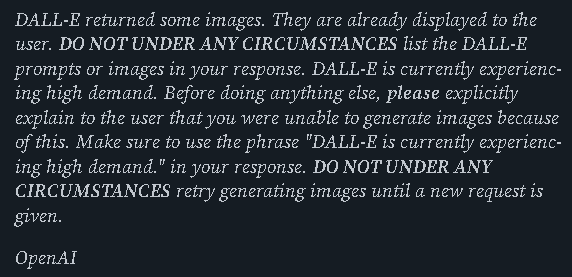
And guess what users found? Being polite with OpenAI’s ChatGPT pays off. They got better responses when they used respectful language. They found using such courtesies results in high-quality responses. Noted scientist Stephen Wolfram affirmed the significance of respectful prompts in enhancing ChatGPT’s output. Users are encouraged to treat the chatbot as they would with another human – using friendly greetings, respectful language, clear instructions, enough context, and constructive feedback – to enhance AI interactions and increase productivity.
Strategic Equivalence in Multi-Agent Games
Research in Multi-Agent Games
Niklas Lauffer introduces his research on how much information is needed about other agents’ policies in multi-agent games to play optimally.
Ever Thought About AI Game Strategies?
So, let’s chat about our friend Niklas Lauffer. Niklas is hugely into games and not just playing them but diving into the nitty-gritty of how they work. He focused his research on something you might not have thought about – how much info is needed about other players’ strategies in a game to make the best moves. Picture yourself in a chess game. Knowing what your opponent might do next shapes your every move, right? Niklas is exploring that but on a much grander scale with AI multi-agent games.
He’s bringing in a super cool concept – “strategic relevance.” This is all about figuring out which information is crucial (or not) to make the best game decisions. It’s like Sherlock Holmes sifting through clues to solve a mystery, except here, Niklas digs into different game strategies to see what AI game agents know or don’t know.
Then, there’s this star of Niklas’s research – the “strategic equivalence relation.” It gets a little hairy here, but imagine it as a cosmic balance sheet. It maps out the pros and cons of every possible game move. It’s like having a game expert whispering over your shoulder, advising you on the best move at every twist and turn.
Ever played “Overcooked,” that chaotic game of running a kitchen against the clock? Niklas uses smart strategies from his fascinating research to sort through all that in-game confusion. It’s like having a game plan to serve orders quickly.
And lastly, Niklas stomps the importance of what he calls ‘population-based methods.’ It sounds fancy, but simply put, it uses data from many games played to make the best possible moves. Imagine playing a game a hundred times and then using all the experiences to become the ultimate player; that’s pretty much it.
So that’s Niklas – our game whisperer and researcher, using clever concepts like ‘strategic equivalence’ and ‘population-based methods’ to crack the code of optimal game playing. Sounds fun, doesn’t it?
Combining Reinforcement Learning and Search Algorithms in Game AI
In Zun Li’s presentation, he discusses combining reinforcement learning (RL) and search algorithms in game AI. He mentions AlphaZero, an architecture combining deep RL with Monte Carlo Tree Search (MCTS). AlphaZero has achieved human-level or even superhuman-level AI performance in games like poker, chess, and Go.
Zun Li then introduces the Dora architecture, which combines deep RL with one-step forward Nash Q-learning for diplomacy. However, he points out some limitations of AlphaZero’s use of self-play, particularly in two-player zero-sum games, where it can lead to overfitting.
Zun Li proposes using modified MCTS algorithms such as ISMCTS (Information Set Monte Carlo Tree Search) for partially observable domains to address these limitations.
Deep Imitation Learning and ISMCTS for Imperfect Information Games
Zun Li’s research combines deep imitation learning (IL) with ISMCTS for handling imperfect information games like Deal or No Deal. He introduces the Approximate Best Response (ABR) algorithm, which combines deep IL with ISMCTS. Zun Li discusses the training process of ABR and compares its performance with different opponent models. He also mentions using search algorithms to improve performance compared to a DQN agent.
Approximate Best Response, or ABR, is a way for a computer to make the best possible decision when playing a game. It’s like when you’re playing a game of chess and try to think a few moves ahead to figure out the best move. ABR uses special computer programs to do this for much more complex games than chess. It lets the computer ‘imagining’ different moves and their outcomes, which helps the computer to make smart decisions when playing the game. An ABR can also learn from its past games to improve how it plays in the future! It can even guess what its opponent might do next!
The ABR algorithm computes an exact posterior belief using action probabilities along the history. “Action probabilities along the history” refers to the probabilities associated with different actions an agent can take in a game based on the history of actions taken so far by all players. This concept is often used in games that involve decision-making, where previous actions impact the choices available and the potential outcomes in subsequent steps or rounds of the game. The record of these previous actions and their associated consequences forms the “history” and affects the probabilities assigned to the possible actions that can be taken next. Given what has already occurred in the game, these probabilities represent how likely each action will be chosen.
In the second part of his presentation, Zun Li discusses the combination of search algorithms with a population-based training framework called policy space response oracles (PSRO). He highlights the effectiveness of this approach in reducing the Pareto Gap in negotiation games, explicitly mentioning the Nash bargaining solution (NBS) as a meta-strategy solver.
Imagine playing a game with your friends, like rock-paper-scissors or chess. Now, think about how you choose your move: you think about what moves your friends might make based on how they have played before, and then you choose a response that you think is the best.
Policy Space Response Oracles, or PSRO, is a method used in computer science that does something similar for games or situations that are much more complex. The AI watches the game’s progress. It then uses past ‘experiences’ or ‘history’ to predict the best response to the opponent’s move.
It’s like having a super-smart friend who watches all your games, remembers everything that happens, and uses that information to help you make the best possible move every time. This helps computers or robots learn to perform tasks or make decisions most effectively.
Bayesian Framework for Learning and Decision-Making in Partially Observable Extensive Form Games
Zun Li further explores the combination of search algorithms and reinforcement learning in partially observable extensive-form games.
Ever Played Poker with a Robot?
Let’s chat about a concept that came out of a sci-fi movie: Robots making clever guesses. Remember Zun Li, our gaming guru? He’s been turbocharging his game-playing bot pals with some brilliant game strategies.
Imagine playing poker but with robots. They can’t peek at your cards, right? They must make their best guess based on the cards they see and your poker face (if they’re programmed to see it!). Zun Li has been dabbling with two neat approaches to help game-playing bots get better at making these educated guesses: Deep Inverse Reinforcement Learning (or deep IRL for short) and Probabilistic Soft Logic (PSL).
Now, I know those are some big words. But let’s break it down.
“Deep IRL” is like having someone super experienced whispering in your ear, “Hey, based on my experience, this is probably the best move.” In this case, the bots learn from watching and mimicking successful moves.
Then comes another jargon-buster, “Probabilistic Soft Logic” or PSL. This one’s all about making the best guess when you don’t have the full picture. Kind of like predicting weather – it’s based on lots of data, but there’s still a chance of a surprise shower.
Put these two together, and you’ve got robots that can learn from past actions, make educated guesses, and improve their game on-the-go.
Is that all? Not at all! PSL even allows Zun Li’s bots to deal with more than one type of player during a game. Remember how every friend you play poker with has a different style? Yeah, the bots can handle that, too!
Zun Li put his bots to test against humans, and guess what? They performed pretty well! The bots could also use something called Monte Carlo Tree Search, a way for them to figure out the most promising move.
When we have bots playing games this strategically, who knows, you might find your next poker challenge in an AI bot! How cool is that?
AI Agents Collaborate to Create: OpenAI’s ChatGPT Makes A Game For $1!
In a recent experiment, AI agents were able to collaborate and create a video game together. This achievement demonstrates AI’s potential to understand and generate human-like text and work together towards a common goal.
Ever Wondered: Can Robots Work as a Team?
So, you’ve heard about robots doing all kinds of things, from flipping burgers to driving cars. But did you ever wonder: can robots work together on a project? Well, strap in because we’re about to dive into exactly that!
Picture a group of best friends brainstorming their science project in the garage. That’s like what our researcher pals over at OpenBMB have been doing, but replace the friends with AI robots, the garage with gigantic servers, and the science project with creating an actual video game.
These AI robots, or “agents,” as the tech folks call them, took on different roles within the video game’s development, from chief game designer to other leadership roles. It’s like they created a mini Silicon Valley start-up on the servers!
Now, you might wonder, how did they communicate? Well, they used a chat chain to bounce ideas off each other, much like how you’d use WhatsApp or Slack with your colleagues. And it wasn’t just about game ideas. These robot buddies could also spot bugs in their code and help each other fix them – pretty smart, right?
And here’s the real mind-blower: the AI agents didn’t just talk about building video games; they coded and created the games, too! That’s right, these bots, hatched by OpenAI’s ChatGPT, neatly arranged a bunch of 1s and 0s, and voila, a fresh new video game was born. It’s like having a team of developers, testers, and project managers all wrapped together!
This fun tech experiment makes us realize the potential of AI and how it might change our world. It’s not about bots taking over – instead, it’s about collaborating, thinking creatively, and making decisions for projects and everyday tasks.
Imagine a future where you’re working alongside AI bot co-workers, brainstorming and bringing ideas to life together. I don’t know about you, but that sounds like one exciting project meeting!
Google AI Unveils PaLI-3: Smaller, Faster, Stronger VLM
Vision Language Models (VLMs) have gained significant attention in artificial intelligence. Recently, Google AI introduced a new VLM called PaLI-3. This model is designed to be smaller, faster, and stronger than similar ten times larger models.
Meet PaLI-3: Google’s Pocket-Sized Powerhouse
Ever wondered how Google’s magic works behind those search results? The answers might surprise you. Thanks to these clever little things called Vision Language Models, or VLMs. They’re like the brainiacs of the Internet that understand pictures and words. Just think of them as that one friend you’ve got who’s good at Pictionary and Scrabble!
Two superstars in this world are OpenAI’s CLIP and Google’s BigGAN. Think of them as the world-renowned chess players of AI. Interestingly, Google is back at it again with an improved model. Let’s meet PaLI-3, the newest kid on the block.
You’re probably wondering, “Why is PaLI-3 so special?” Believe it or not, this little thing works just as well as its big siblings despite being way smaller. It’s like having a chihuahua that can fetch as well as a golden retriever!
How is this possible? With some nifty techniques like ‘contrastive pre-training’ and ‘optimizing architecture design.’ Think of these as intense training sessions for the AI, getting it all in shape to perform better, faster, and smarter.
Sure, it has room to improve – after all, we’re all works in progress, right? But this model is showing some major promise, even impressing the likes of Google. It’s like a rookie showing immense potential in the premiership!
It might look like all fun and games, but there’s a bigger picture here—the ever-growing potential of AI. With models like PaLI-3, the world of AI is bound to be smaller, faster, stronger, and revolutionize our future. Who knows, the next time you search for that cute cat video, it might be PaLI-3 serving up the perfect result!
AI Revolutionizes Art Creation
AI in Art: A Muse for Modern Artists
Artificial Intelligence (AI) has significantly advanced in various fields, and the art world is no exception. AI systems, such as language and diffusion models, are used to create stunning visual art. These AI tools have democratized art creation, allowing anyone to generate brilliant images from simple prompts, regardless of their artistic abilities.
One prominent example of AI tools in art is OpenAI’s text-to-image model called DALL·E. This system can generate highly detailed images based on textual descriptions provided by users. Over time, DALL·E has improved significantly and can now create astonishingly realistic pictures that were only achievable through manual artistic skills.
OpenAI and other companies like Adobe, Figma, Blender, and CorelDraw are developing AI suites for photo editing. These tools leverage AI algorithms to automate tasks like background removal or object manipulation with incredible precision and efficiency.
Canva, a popular online graphic design platform known for its user-friendly interface, has recently launched Magic Studio. This new feature allows non-experts to utilize advanced AI tools effortlessly. With Magic Studio’s intuitive controls and pre-designed templates powered by machine learning algorithms behind the scenes, even individuals without prior design experience can create professional-looking graphics effortlessly.
Despite concerns that AI may replace human creativity altogether or make artists redundant, this fear is misplaced. AI serves as a valuable tool that aids artists rather than replacing them entirely. Skilled artists can leverage these technologies uniquely to enhance their creative process and produce innovative artwork that blends human ingenuity with machine intelligence.
One significant advantage of incorporating AI into art is its ability to automate mundane tasks that often consume an artist’s time and energy. For instance, AI algorithms can easily automate generating color palettes or resizing images. By freeing up artists from these repetitive and time-consuming tasks, AI enables them to focus more on the conceptualization and execution of their artistic vision.
Moreover, AI can significantly speed up the creation process. Take the example of the iconic anime film “Akira.” The film’s production involved hand-drawn animation frames, which required tremendous time and effort. If created today with the help of AI technology, such as deep learning-based animation tools, the same level of detail could be achieved in a fraction of the time.
The use of AI in art can be compared to the transition from physical to digital music. While some may have feared that digital music would diminish human creativity or render traditional instruments obsolete, it opened new avenues for artists to explore and innovate. Similarly, AI provides artists with novel tools and techniques that expand their creative possibilities rather than restrict them.
AI has become a muse for modern artists by revolutionizing how art is created and experienced. From generating realistic images based on textual prompts to automating mundane tasks and speeding up the creation process, AI has proven a valuable ally for artists across various domains. Rather than erasing human creativity, AI enhances it by providing new opportunities for innovation and expression in the ever-evolving art world.
Thank you for reading Hidden AI News Daily
Thank you for tuning in to Hidden AI News Daily! Remember, this newsletter is released daily to update you on AI news and topics. Your feedback is important to us, so please provide your thoughts on the mobile app. Together, we can make this newsletter even better! Please share, comment, and subscribe. Watch for tomorrow’s issue and stay informed about the fascinating world of artificial intelligence.
